纺织学报 ›› 2026, Vol. 47 ›› Issue (02): 47-55.doi: 10.13475/j.fzxb.20250907801
王彬1, 侯泽明1, 徐英俊1( ), 王玉忠2
WANG Bin1, HOU Zeming1, XU Yingjun1(), WANG Yuzhong2
摘要:
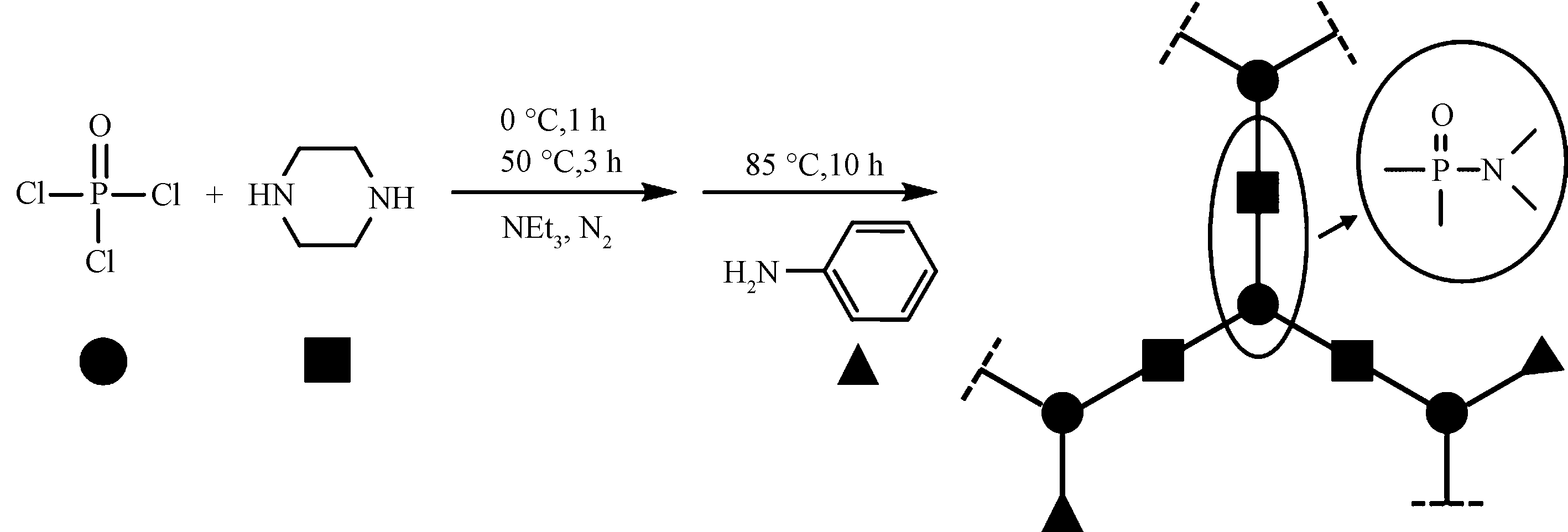
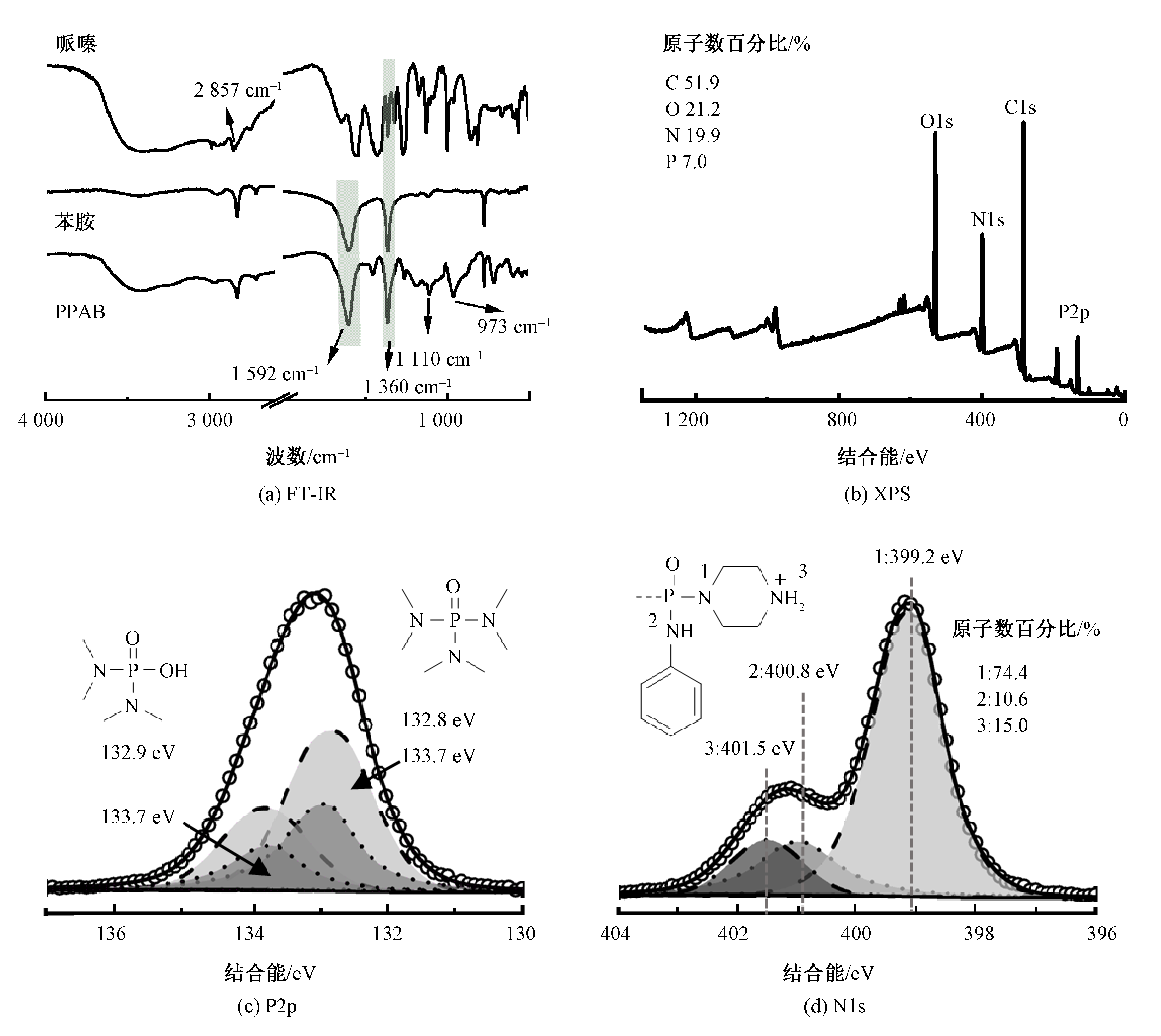
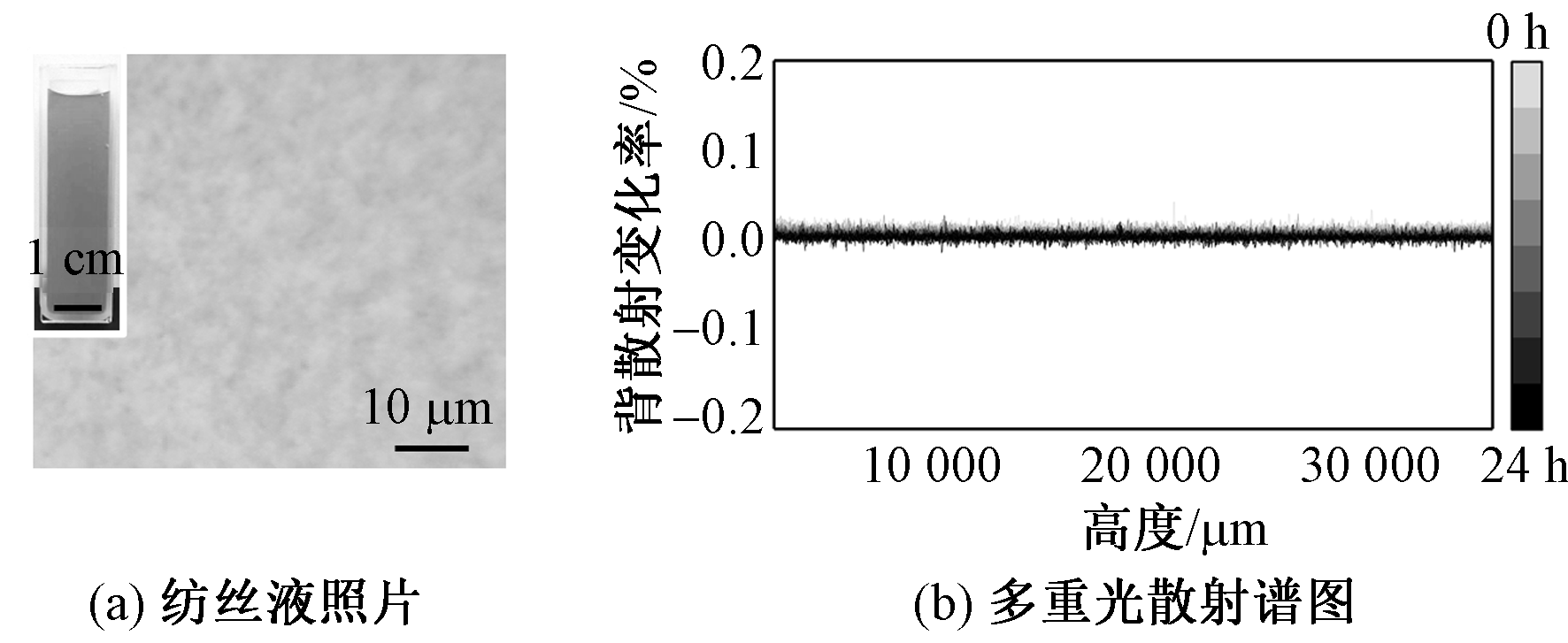
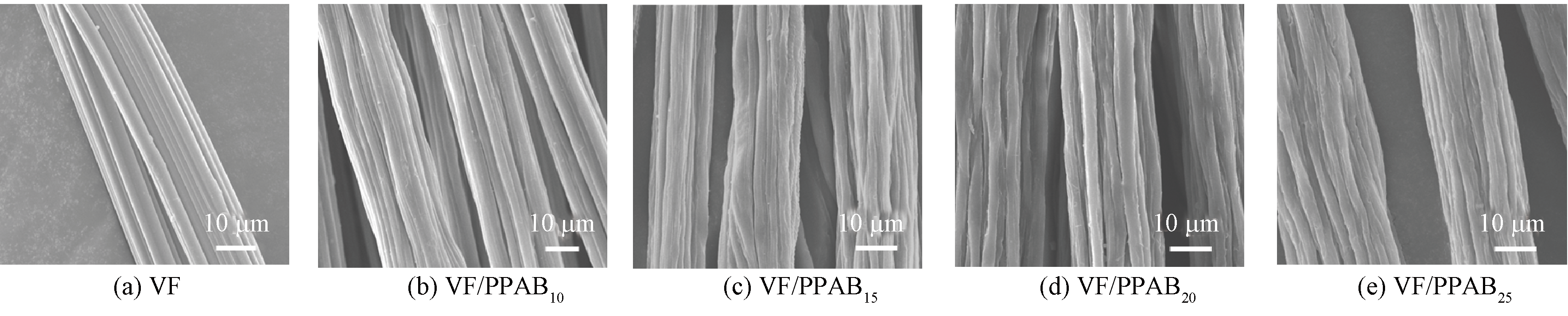
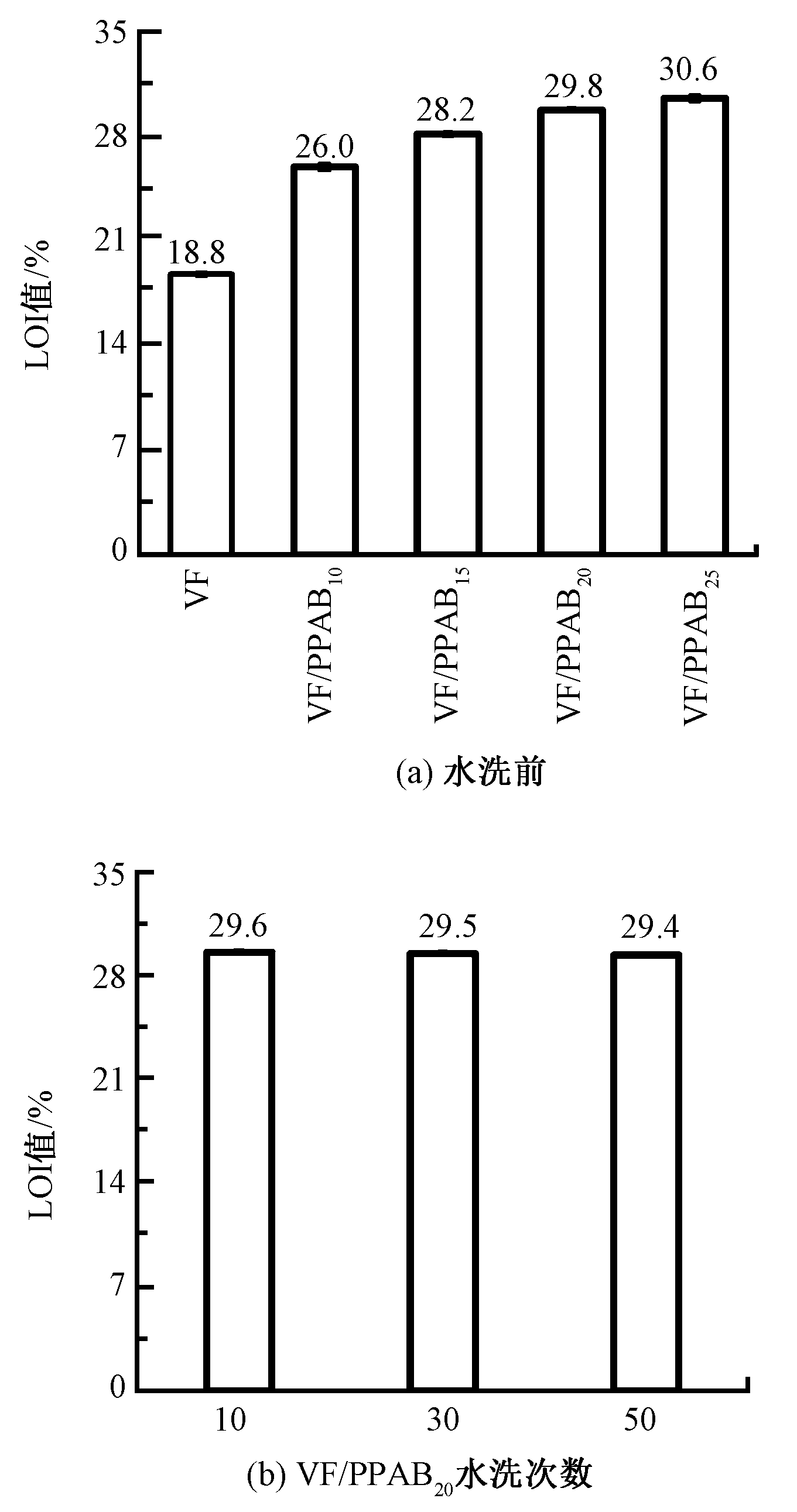
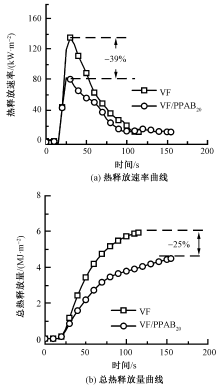
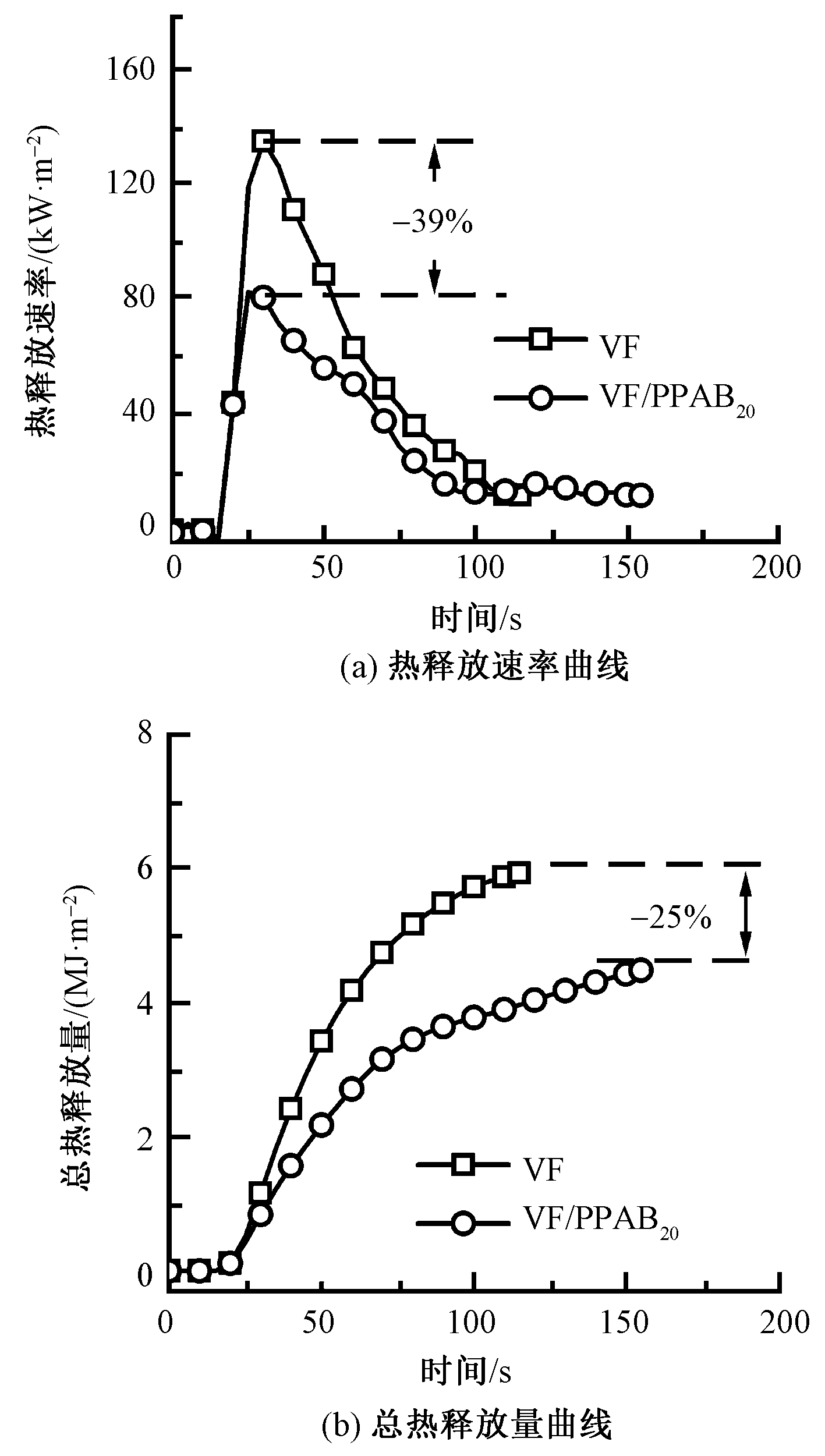
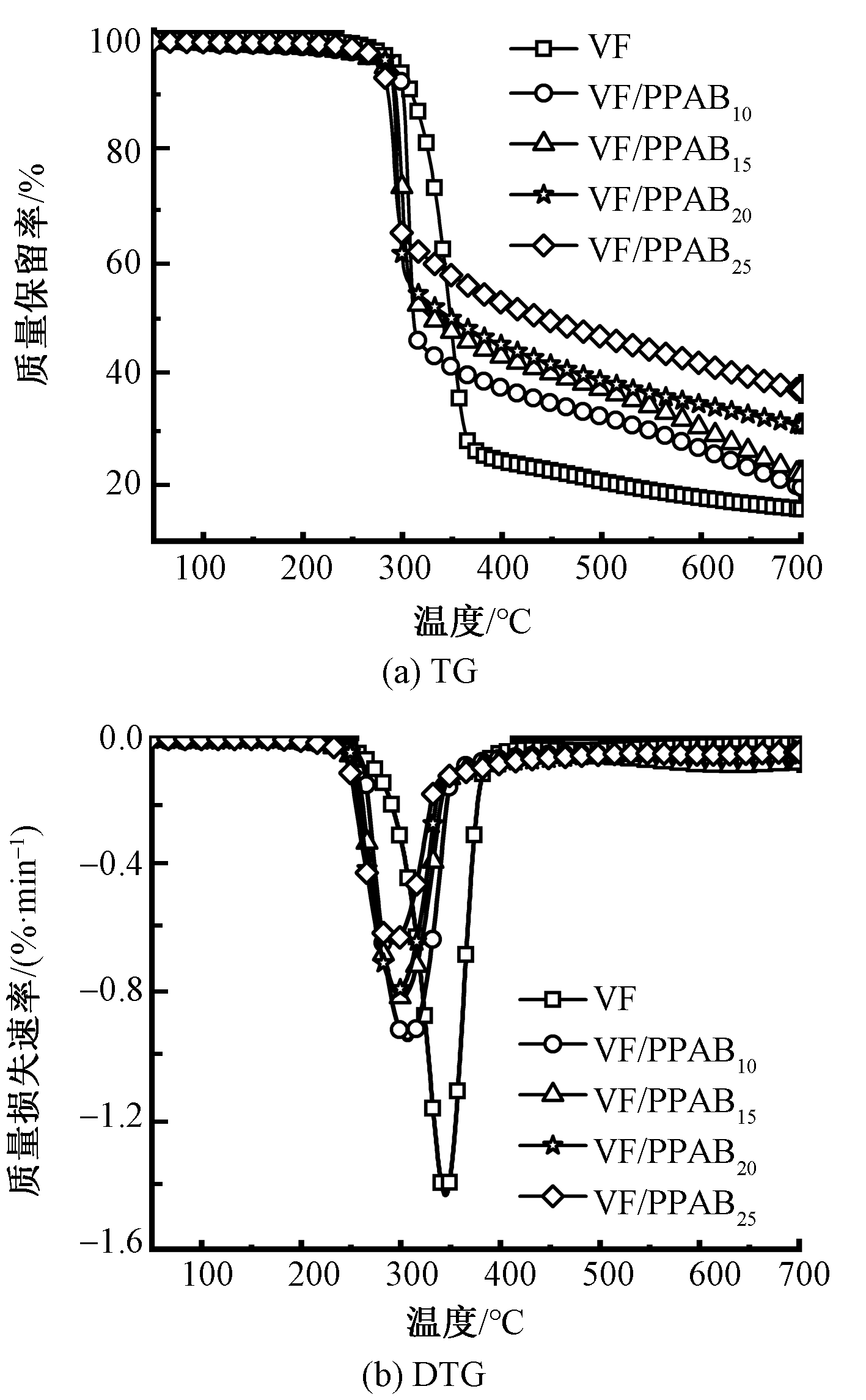
为满足战训服、消防服等领域对高阻燃性再生纤维素纤维的需求,以三氯氧磷、哌嗪和苯胺为原料,合成一种含苯胺聚磷酰哌嗪阻燃剂(PPAB),并将其按不同比例与粘胶纺丝液共混,制得系列阻燃再生纤维素纤维。借助光学显微镜、多重光散射仪分析了阻燃剂在纺丝液体系中的分散性和稳定性,并系统研究了纤维的热稳定性、阻燃性能、燃烧行为、力学强度以及阻燃机制。结果表明:PPAB在纺丝液中分散均匀、无团聚,不影响纤维的可纺性;当PPAB在纤维中的质量分数为20%时,所得纤维极限氧指数值达29.8%,燃烧过程中热释放速率大幅降低,烟释放量低,同时其力学性能保持优良,阻燃耐水洗牢度突出,回潮率和白度与普通粘胶纤维相近;PPAB兼具凝聚相和气相阻燃作用,残炭稳定性突出。
中图分类号:
| [1] |
MA J Z, FENG F F, SONG Y, et al. Preparation and properties of the flame-retardant viscose fibers based on the intumescent dithiocarboxyphosphate microcapsules[J]. Cellulose, 2024, 31(2): 1267-1278.
doi: 10.1007/s10570-023-05668-w |
| [2] |
LIU J L, MAO B H, CHEN C, et al. N-chlorination of urea-formaldehyde resin microspheres for antibacterial regenerated cellulose fibers[J]. International Journal of Biological Macromolecules, 2025, 296: 139549.
doi: 10.1016/j.ijbiomac.2025.139549 |
| [3] | 徐英俊, 王芳, 倪延朋, 等. 纺织品的阻燃及多功能化研究进展[J]. 纺织学报, 2022, 43(2): 1-9. |
|
XU Yingjun, WANG Fang, NI Yanpeng, et al. Research progress on flame-retardation and multi-functionalization of textiles[J]. Journal of Textile Research, 2022, 43(2): 1-9.
doi: 10.1177/004051757304300101 |
|
| [4] | 蒋之铭, 张超, 张晨曦, 等. 磷酸酯化聚乙烯亚胺阻燃粘胶织物的制备与性能[J]. 纺织学报, 2023, 44(6): 161-167. |
| JIANG Zhiming, ZHANG Chao, ZHANG Chenxi, et al. Preparation and properties of flame-retardant viscose fabrics modified with phosphated polyethyleneimine[J]. Journal of Textile Research, 2023, 44(6): 161-167. | |
| [5] |
BELYAEVA O A, BYCHKOVA E V, PANOVA L G. Effect of the composition of flame retardant systems on the properties of viscose fibres[J]. Fibre Chemistry, 2008, 40(6): 510-512.
doi: 10.1007/s10692-009-9097-y |
| [6] |
NECHYPORCHUK O, ULMEFORS H, TELEMAN A. Silica-rich regenerated cellulose fibers enabled by delayed dissolution of silica nanoparticles in strong alkali using zinc oxide[J]. Carbohydrate Polymers, 2021, 264: 118032.
doi: 10.1016/j.carbpol.2021.118032 |
| [7] |
HE Y F, CHEN Y, ZHENG Q K, et al. Preparation and properties of flame-retardant viscose fiber modified with poly [bis(methoxyethoxy)phosphazene[J]. Fibers and Polymers, 2015, 16(5): 1005-1011.
doi: 10.1007/s12221-015-1005-x |
| [8] |
WANG B, HOU Z M, XU Y J, et al. Sulfur-free polymeric flame retardants enabling low-heat and low-smoke release in regenerated cellulose fibers[J]. Industrial Crops and Products, 2025, 231: 121163.
doi: 10.1016/j.indcrop.2025.121163 |
| [9] |
YANG T H, WU Y P, CHENG Y C, et al. Synthesis of a charring agent containing triazine and benzene groups and its intumescent flame retardant performance for polypropylene[J]. Polymer Degradation and Stability, 2022, 204: 110107.
doi: 10.1016/j.polymdegradstab.2022.110107 |
| [10] |
DUAN H J, CHEN Y S, JI S, et al. A novel phosphorus/nitrogen-containing polycarboxylic acid endowing epoxy resin with excellent flame retardance and mechanical properties[J]. Chemical Engineering Journal, 2019, 375: 121916.
doi: 10.1016/j.cej.2019.121916 |
| [11] |
HU X, WANG B T, GUO Z H, et al. Roles of phosphoramide derivatives in flame retardancy, thermal degradation and crystallization behaviors of polylactic acid[J]. International Journal of Biological Macromolecules, 2022, 219: 558-570.
doi: 10.1016/j.ijbiomac.2022.07.172 |
| [12] |
WANG S J, XU D H, LIU Y, et al. Preparation and mechanism of phosphoramidate-based sol-gel coating for flame-retardant viscose fabric[J]. Polymer Degradation and Stability, 2021, 190: 109620.
doi: 10.1016/j.polymdegradstab.2021.109620 |
| [13] |
LIU J L, QU L Y, SHI Y L, et al. Fabrication of antimicrobial viscose fibers containing silver nanoparticle@catechol formaldehyde resin microspheres[J]. Cellulose, 2024, 31(1): 703-715.
doi: 10.1007/s10570-023-05647-1 |
| [14] | 史玉磊, 曲连艺, 刘江龙, 等. 氧化锌/儿茶酚甲醛树脂微球抗菌粘胶纤维的制备及其性能[J]. 纺织学报, 2024, 45(2): 21-27. |
| SHI Yulei, QU Lianyi, LIU Jianglong, et al. Fabrication and properties of antibacterial viscose fibers containing zinc oxide/catechol-derived resin microspheres[J]. Journal of Textile Research, 2024, 45(2): 21-27. | |
| [15] |
SHI X H, XIE W M, WU S J, et al. Facile fabrication of high-efficiency reactive flame retardant toward cotton fabric with good hand feeling and high fire safety[J]. Cellulose, 2023, 30(11): 7313-7328.
doi: 10.1007/s10570-023-05306-5 |
| [16] |
LI N, KANG G W, LIU H, et al. Hybrid nanoparticles based on novel Schiff Base for durable flame retardant and antibacterial properties[J]. Composites Part B: Engineering, 2022, 238: 109905.
doi: 10.1016/j.compositesb.2022.109905 |
| [17] |
LIU Y D, CHENG F F, LI K, et al. Lightweight, flame retardant Janus carboxymethyl cellulose aerogel with fire-warning properties for smart sensor[J]. Carbohydrate Polymers, 2024, 328: 121730.
doi: 10.1016/j.carbpol.2023.121730 |
| [18] |
ZHANG Y T, ZHAO L B, LIU Y, et al. Production of flame-retardant phosphorylated cellulose nanofibrils by choline chloride based reactive deep eutectic solvent[J]. Carbohydrate Polymers, 2025, 348: 122931.
doi: 10.1016/j.carbpol.2024.122931 |
| [19] |
HUANG X, REN J, RAN J Y, et al. Recent advances in pyrolysis of cellulose to value-added chemicals[J]. Fuel Processing Technology, 2022, 229: 107175.
doi: 10.1016/j.fuproc.2022.107175 |
| [20] |
FU C, XU X L, YIN G Z, et al. Surface engineering for cellulose as a boosted layer-by-layer assembly: excellent flame retardancy and improved durability with introduction of bio-based "molecular glue"[J]. Applied Surface Science, 2022, 585: 152550.
doi: 10.1016/j.apsusc.2022.152550 |
| [1] | 李凯, 王雨萌, 张逸龙, 杨湙雯, 董浩珍, 吴晶. 湿响应纤维束的制备及其驱动性能[J]. 纺织学报, 2026, 47(02): 126-134. |
| [2] | 张苒, 祝仕玲, 王栋, 刘琼珍, 陆莹. 硫化铋/碳纳米管/聚偏二氟乙烯复合温度传感纤维的制备与性能[J]. 纺织学报, 2026, 47(02): 18-25. |
| [3] | 魏建斐, 魏艳颖, 马超慧, 胡晓鹏, 邴琳涵, 樊瑜, 林彬泽, 董振峰, 朱志国, 王锐. 碳点的宏量制备及其对聚酰胺66阻燃与力学性能协同增强机制[J]. 纺织学报, 2026, 47(02): 37-46. |
| [4] | 刘一鸣, 李琳, 杜鲜晶, 刘攀, 殷霞, 田明伟. 内螺旋结构弹性导电纱线的制备及其应变不敏感性能的调控[J]. 纺织学报, 2026, 47(01): 115-122. |
| [5] | 陈克林, 李卓, 王晓歌, 李成晋, 胡建臣, 张克勤. 微流控湿法纺丝制备基于聚羟基脂肪酸酯的光致变色纤维及其性能[J]. 纺织学报, 2026, 47(01): 46-53. |
| [6] | 邓晶, 王蕊宁, 孙润军, 张亚娟, 郭海冰, 雷轲. 用于脉搏监测的海藻酸钠改性水性聚氨酯/液态金属导电传感纤维[J]. 纺织学报, 2025, 46(12): 74-82. |
| [7] | 高敏, 程春祖, 徐中凯, 赵庆波, 张东, 代欣欣. 含硅改性磷氮阻燃Lyocell纤维的制备及其性能[J]. 纺织学报, 2025, 46(10): 19-29. |
| [8] | 梁锋, 方沿, 张伟华, 唐余玲, 李双洋, 周建飞, 石碧. 基于金属-多酚网络的胶原蛋白基纤维制备及其力学性能[J]. 纺织学报, 2025, 46(08): 10-17. |
| [9] | 许云凯, 宋婉萌, 张旭, 刘云. 单宁酸基高效阻燃Lyocell织物的制备及其性能[J]. 纺织学报, 2025, 46(08): 145-153. |
| [10] | 陈展毓, 俞森龙, 周家良, 朱丽萍, 周哲, 相恒学, 朱美芳. 有机膦酸改性聚乳酸织物的制备及其性能[J]. 纺织学报, 2025, 46(08): 154-163. |
| [11] | 王清清, 廖师琴, 魏取福. 光电双响应纱线应变传感器的制备及其性能[J]. 纺织学报, 2025, 46(08): 71-79. |
| [12] | 徐丽亚, 汪瑱, 杨鸿杰, 汪蔚. 氧化锌-银/生物基聚酰胺56纳米纤维膜的制备及其抗菌性能[J]. 纺织学报, 2025, 46(07): 37-45. |
| [13] | 林思伶, 刘赋瑶, 张成, 侯琳, 徐炎炎, 付冉迁, 樊威. 双向调温阻燃防静电纺织品的制备及其性能[J]. 纺织学报, 2025, 46(06): 38-44. |
| [14] | 谭文萍, 张硕, 张倩, 张寅, 刘润政, 黄晓卫, 明津法. 聚乳酸纤维气凝胶制备及其辐射制冷性能[J]. 纺织学报, 2025, 46(06): 63-72. |
| [15] | 张泽祺, 周涛, 周文琪, 范中尧, 杨佳蕾, 陈国印, 潘绍武, 朱美芳. 生理电信号监测用导电纤维及其研究进展[J]. 纺织学报, 2025, 46(05): 70-76. |
|
||
 京公网安备11010502044800号