纺织学报 ›› 2026, Vol. 47 ›› Issue (03): 60-69.doi: 10.13475/j.fzxb.20250902901
陈泳良1, 杨潇1,2, 王朝荣1,2, 黄俊鸿1, 李彦1,2, 王璐1,2( )
)
CHEN Yongliang1, YANG Xiao1,2, WANG Chaorong1,2, HUANG Junhong1, LI Yan1,2, WANG Lu1,2()
摘要:
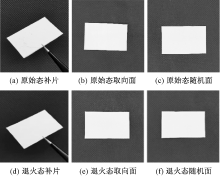
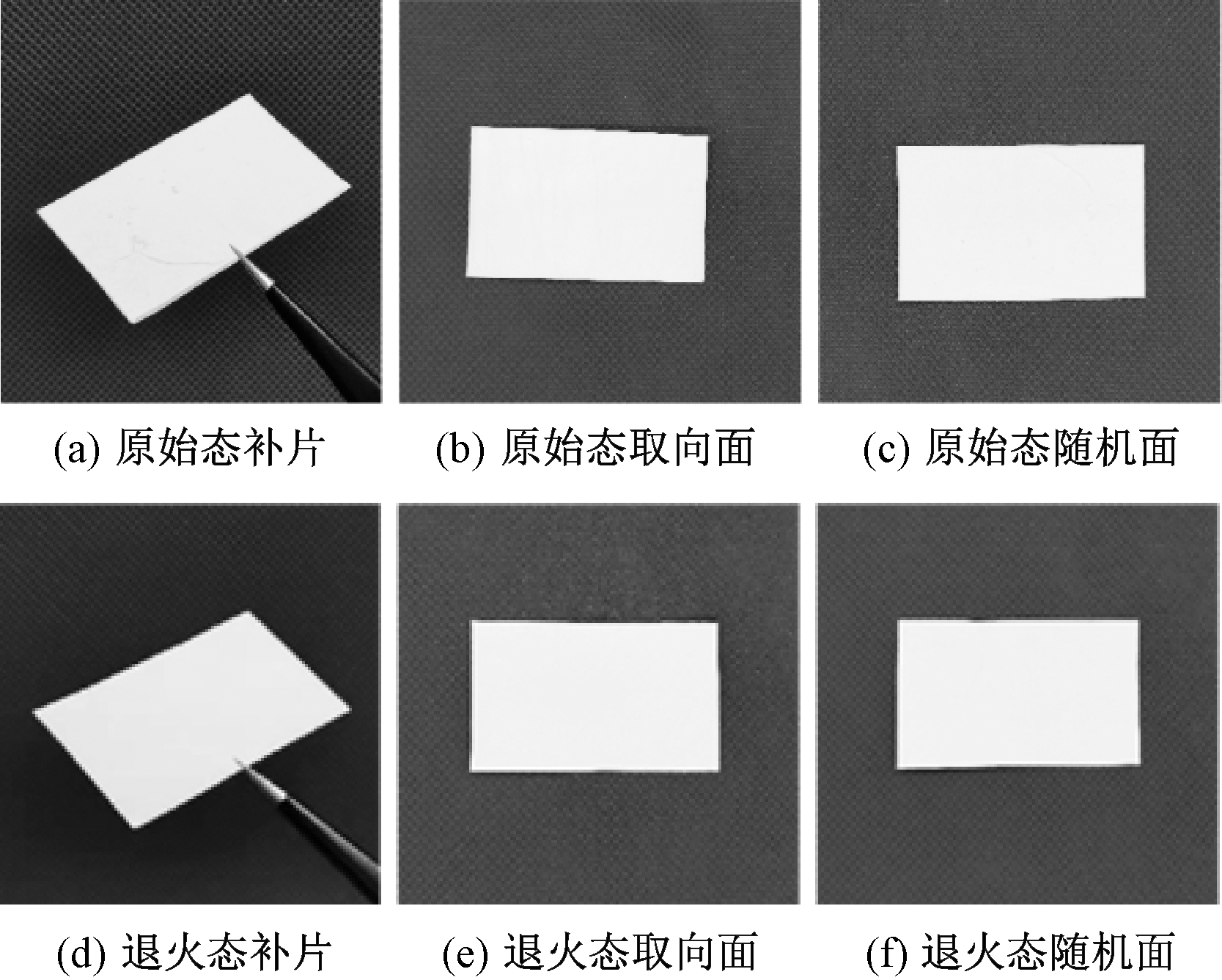
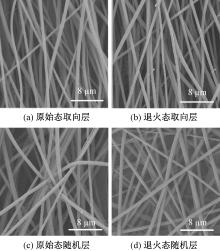
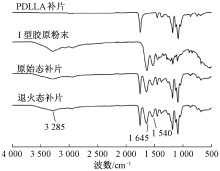
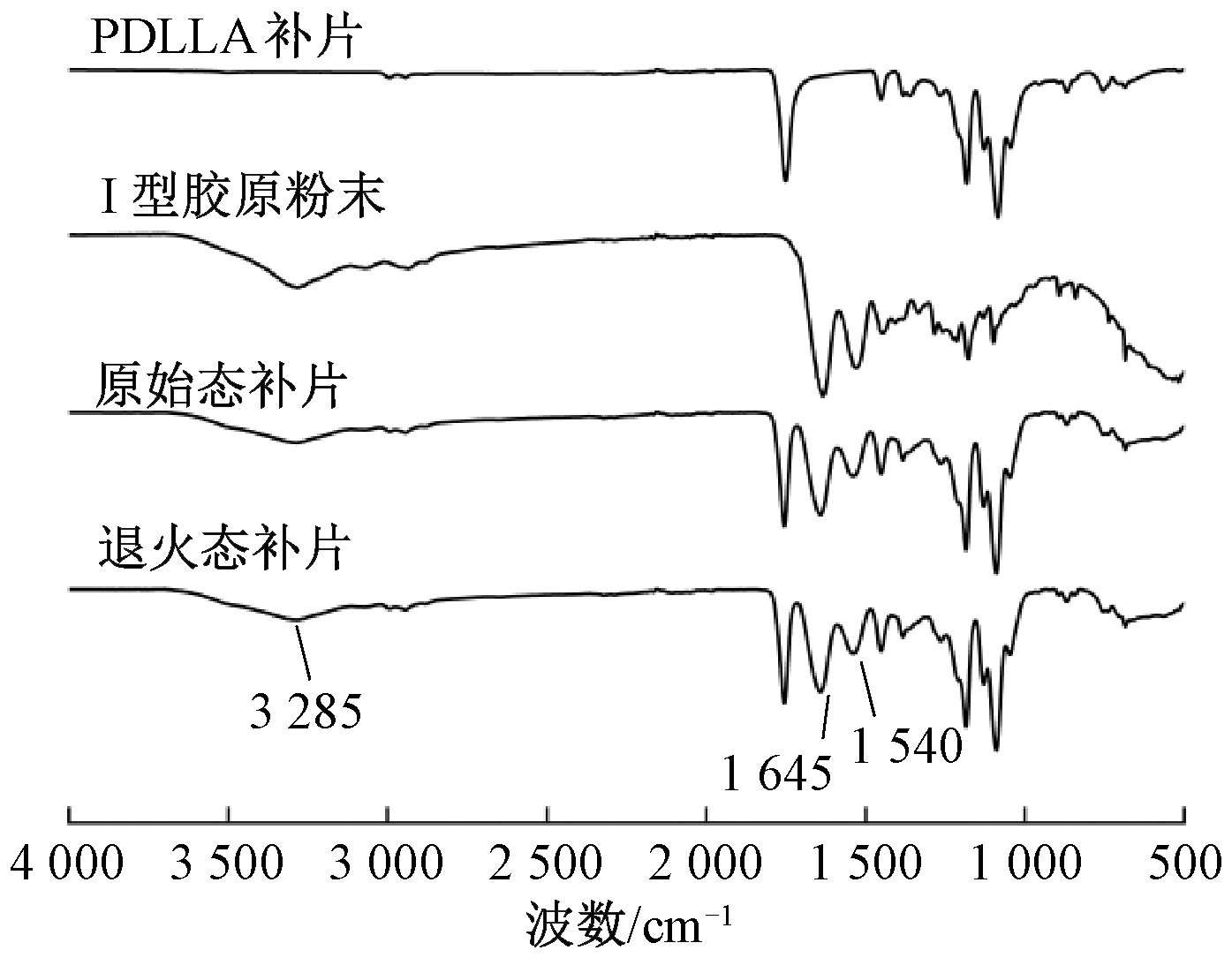
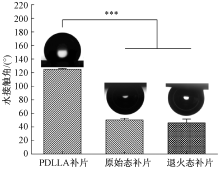
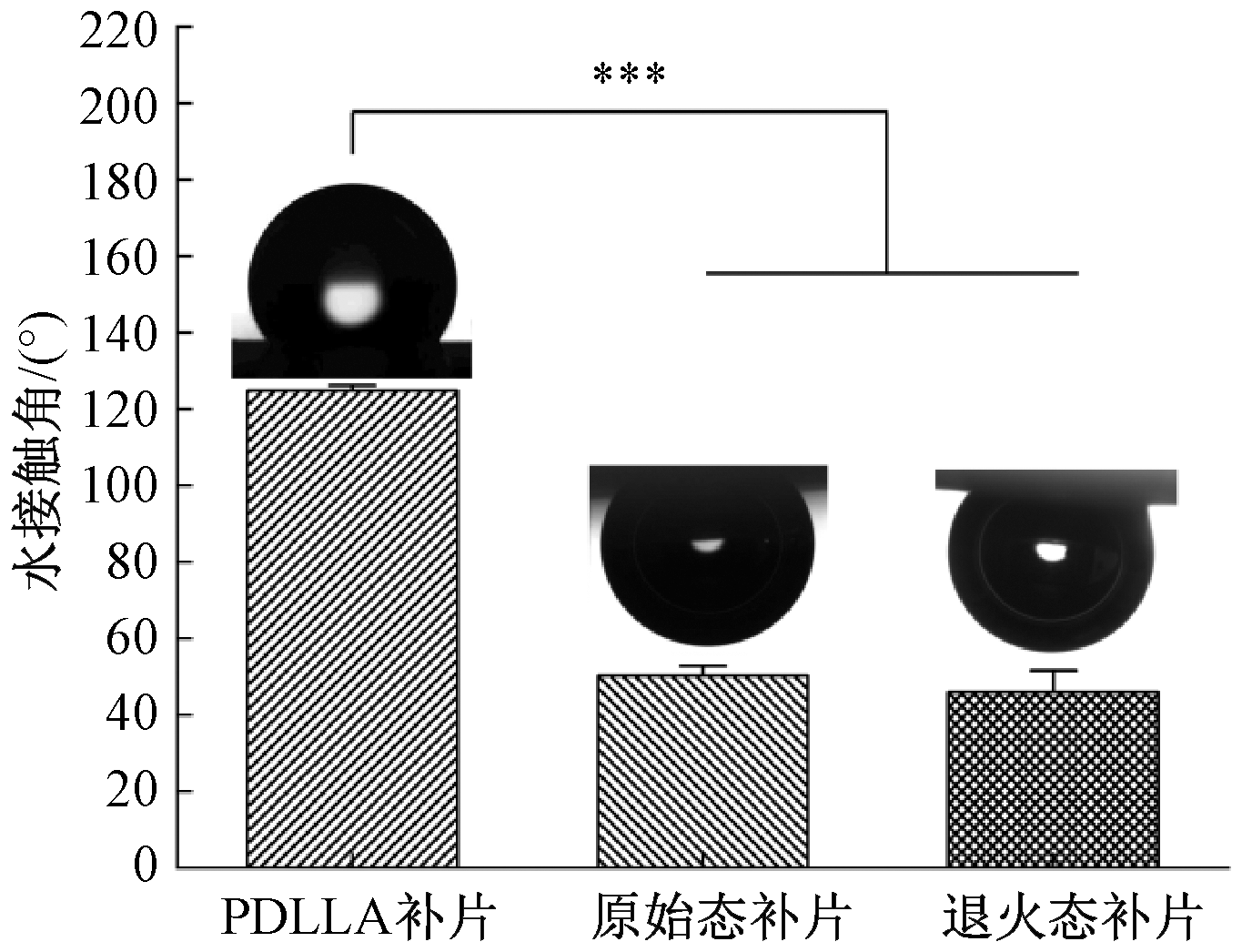
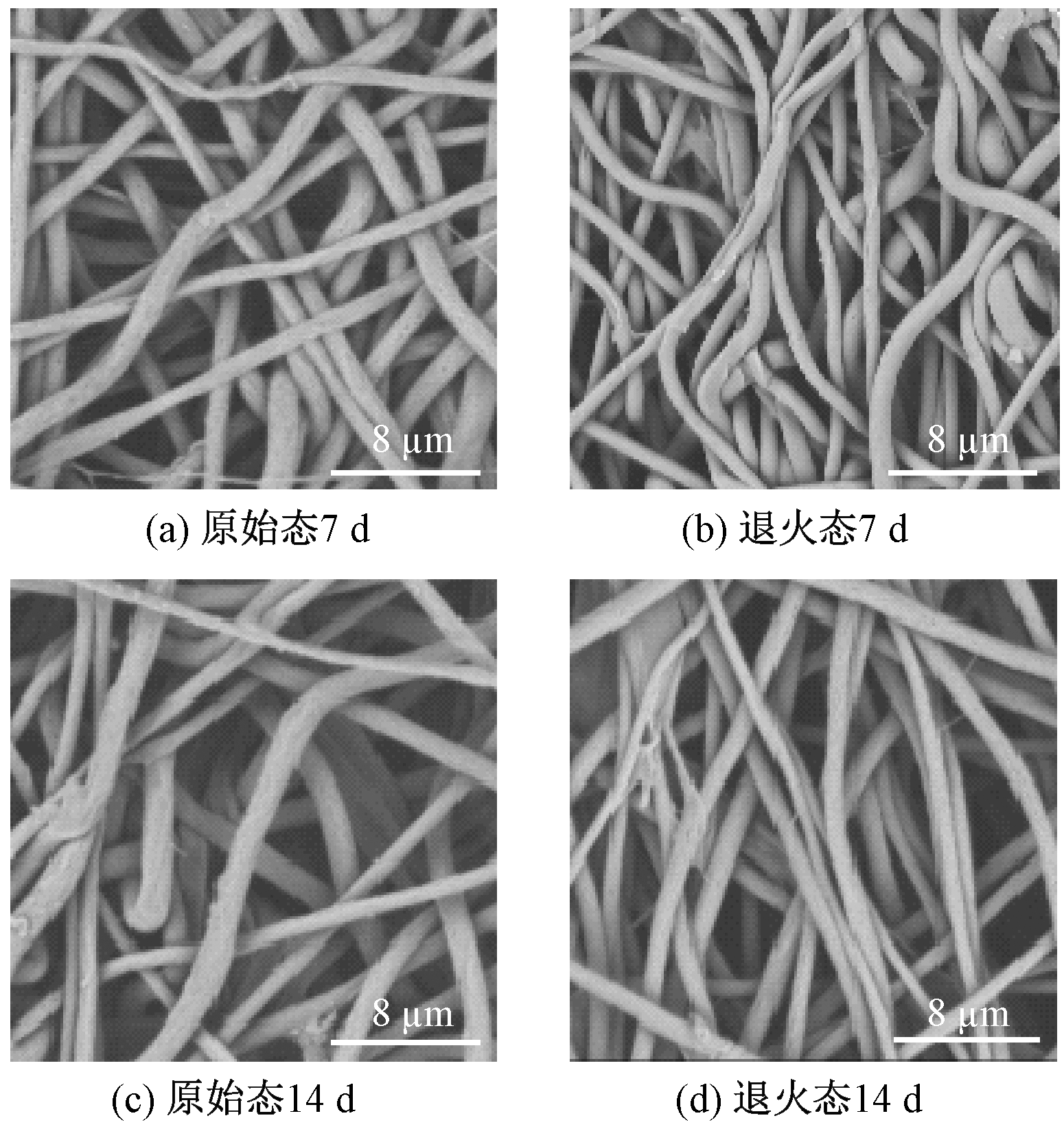
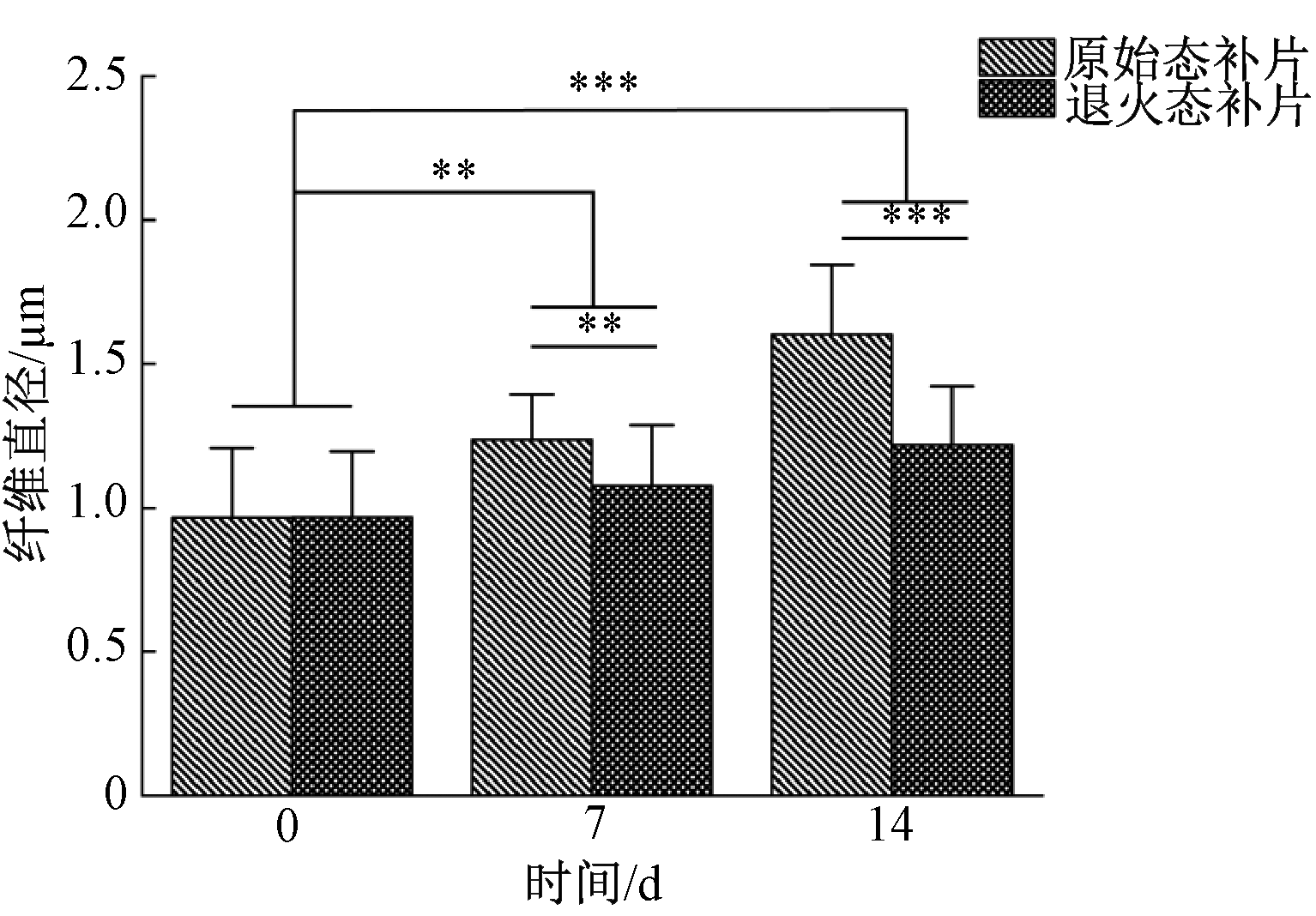
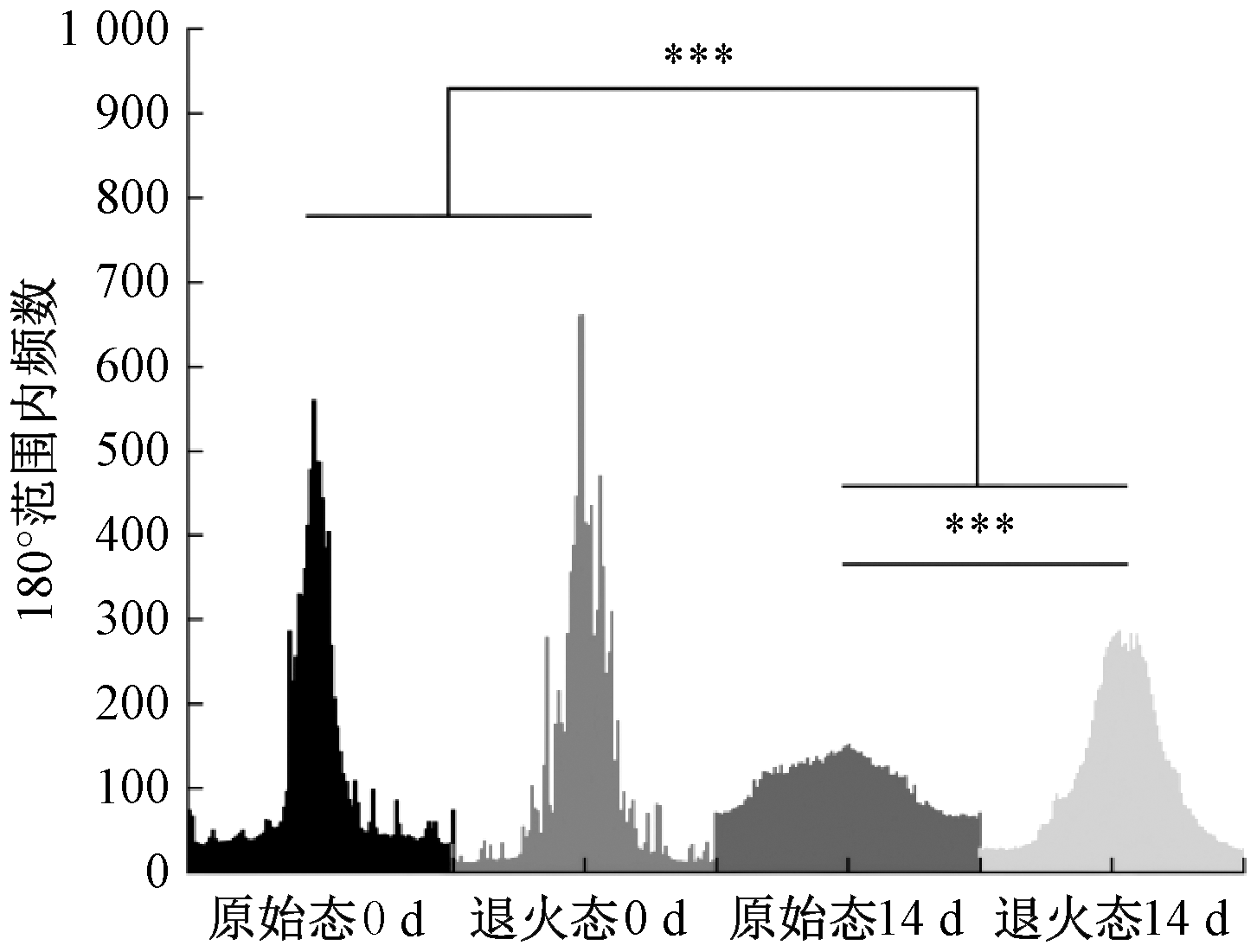
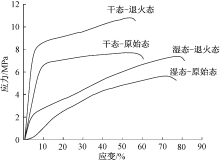
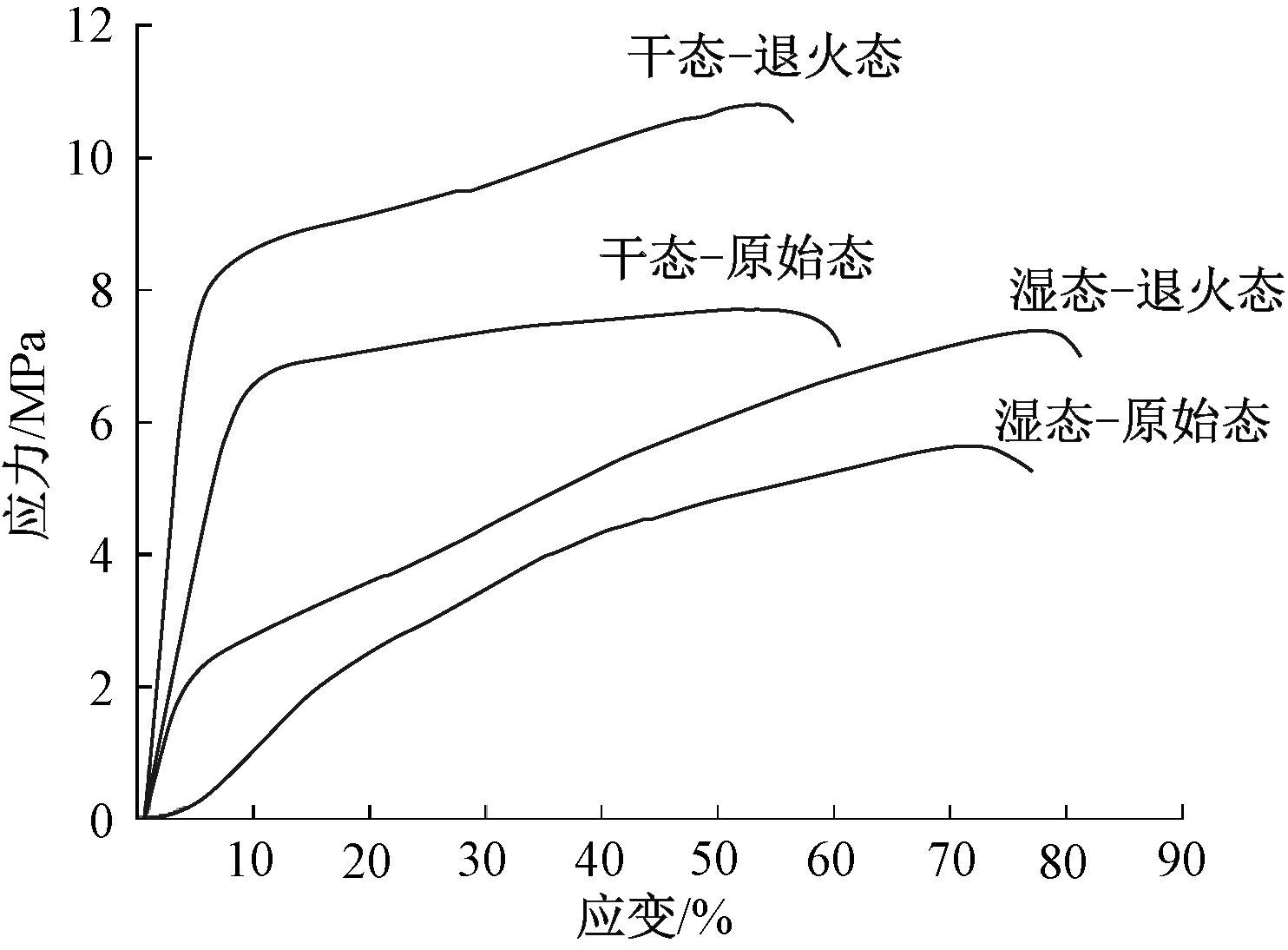
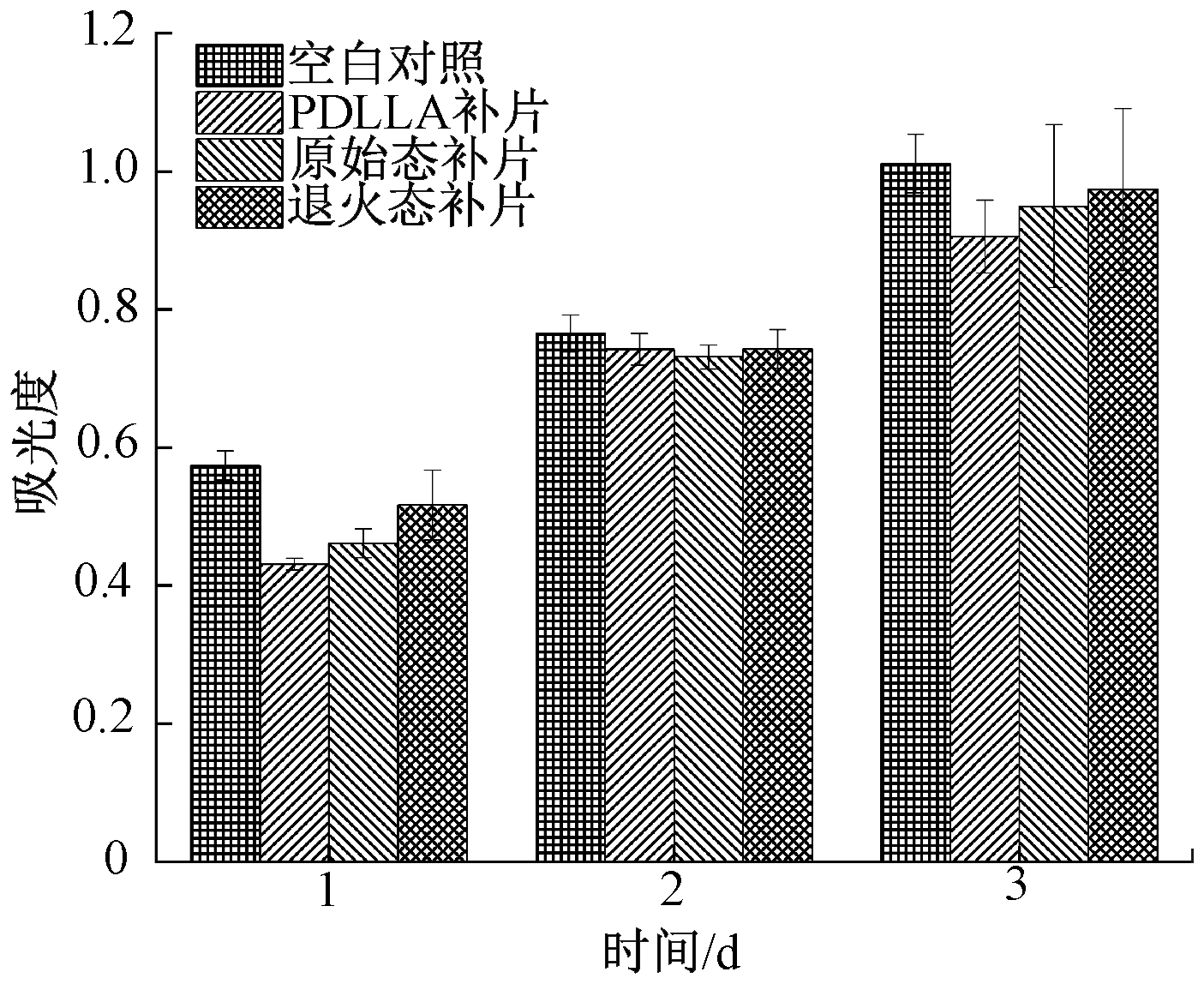
针对肩袖肌腱修复中面临的再撕裂率高的问题,通过共混外消旋聚乳酸(PDLLA)与来源于牛跟腱的I型胶原,结合静电纺丝技术制备了原始态PDLLA/I型胶原复合纤维补片(简称原始态补片),进一步采用热退火处理获得退火态PDLLA/I型胶原复合纤维补片(简称退火态补片)。借助扫描电子显微镜、傅里叶变换红外光谱仪、万能试验机及细胞实验,系统表征了补片的宏/微观形貌、化学成分、亲水性、力学性能、湿态稳定性及细胞相容性。结果表明:原始态与退火态补片均呈纳米-微米级纤维交织结构,孔隙率大于80%,且补片中成功添加的I型胶原成分使疏水性PDLLA的亲水性得到大幅提升;退火态补片相比原始态补片在湿态环境中展现出更优的综合稳定性:经14 d的液相环境培养后,纤维取向保留率相对提高了50%、面积收缩率降低了39.3%,且力学性能保持更完整(湿态条件下,断裂强度与弹性模量较原始态补片分别提高了31.21%和84.53%);退火态补片也具有良好细胞相容性(细胞增殖率>80%)与促细胞黏附能力,展现出应用于肩袖肌腱修复的潜力。
中图分类号:
| [1] |
ZHU S B, HE Z J, JI L C, et al. Advanced nanofiber-based scaffolds for Achilles tendon regenerative engineering[J]. Frontiers in Bioengineering and Biotechnology, 2022, 10: 897010.
doi: 10.3389/fbioe.2022.897010 |
| [2] |
ZHAO S, SU W, SHAH V, et al. Biomaterials based strategies for rotator cuff repair[J]. Colloids and Surfaces B: Biointerfaces, 2017, 157: 407-416.
doi: 10.1016/j.colsurfb.2017.06.004 |
| [3] |
LONGO U G, BERTON A, KHAN W S, et al. Histopathology of rotator cuff tears[J]. Sports Medicine and Arthroscopy Review, 2011, 19(3): 227-236.
doi: 10.1097/JSA.0b013e318213bccb pmid: 21822106 |
| [4] |
TASHJIAN R Z. Epidemiology, natural history, and indications for treatment of rotator cuff tears[J]. Clinics in Sports Medicine, 2012, 31(4): 589-604.
doi: 10.1016/j.csm.2012.07.001 pmid: 23040548 |
| [5] |
CITRO V, CLERICI M, BOCCACCINI A R, et al. Tendon tissue engineering: an overview of biologics to promote tendon healing and repair[J]. Journal of Tissue Engineering, 2023, 14: 20417314231196275.
doi: 10.1177/20417314231196275 |
| [6] |
JIANG J S, WAN J P, YU X Y, et al. Biomimetic patch with gradient-induced regeneration for tendon-bone interface to repair rotator cuff injury[J]. Chemical Engineering Journal, 2025, 506: 159985.
doi: 10.1016/j.cej.2025.159985 |
| [7] |
SAVEH-SHEMSHAKI N, S NAIR L, LAURENCIN C T. Nanofiber-based matrices for rotator cuff regenerative engineering[J]. Acta Biomaterialia, 2019, 94: 64-81.
doi: 10.1016/j.actbio.2019.05.041 |
| [8] | FLORES-ROJAS G G, GÓMEZ-LAZARO B, LÓPEZ-SAUCEDO F, et al. Electrospun scaffolds for tissue engineering: a review[J]. Macromol, 2023, 3(3): 524-553. |
| [9] |
CHENG F, SONG D Y, LI H B, et al. Recent progress in biomedical scaffold fabricated via electrospinning: design, fabrication and tissue engineering application[J]. Advanced Functional Materials, 2025, 35(1): 2406950.
doi: 10.1002/adfm.v35.1 |
| [10] |
LIU S, YU J M, GAN Y C, et al. Biomimetic natural biomaterials for tissue engineering and regenerative medicine: new biosynthesis methods, recent advances, and emerging applications[J]. Military Medical Research, 2023, 10(1): 16.
doi: 10.1186/s40779-023-00448-w pmid: 36978167 |
| [11] |
XUE J J, WU T, DAI Y Q, et al. Electrospinning and electrospun nanofibers: methods, materials, and applications[J]. Chemical Reviews, 2019, 119(8): 5298-5415.
doi: 10.1021/acs.chemrev.8b00593 pmid: 30916938 |
| [12] |
ZHAO S, ZHAO X, DONG S K, et al. A hierarchical, stretchable and stiff fibrous biotemplate engineered using stagger-electrospinning for augmentation of rotator cuff tendon-healing[J]. Journal of Materials Chemistry B, 2015, 3(6): 990-1000.
doi: 10.1039/c4tb01642d pmid: 32261978 |
| [13] | 高超, 李超明, 徐玉龙, 等. 静电纺丝聚己内酯/Ⅰ型胶原纳米纤维取向性补片用于肩袖修复[J]. 中国修复重建外科杂志, 2019, 33(5):628-633. |
|
GAO Chao, LI Chaoming, XU Yulong, et al. Electrospun polycaprolactone/collagen type Ⅰ nanofibers oriented patch for rotator cuff repairing[J]. Chinese Journal of Reparative and Reconstructive Surgery, 2019, 33(5): 628-633.
doi: 10.7507/1002-1892.201811034 pmid: 31090359 |
|
| [14] |
YANG G, LIN H, ROTHRAUFF B B, et al. Multilayered polycaprolactone/gelatin fiber-hydrogel composite for tendon tissue engineering[J]. Acta Biomaterialia, 2016, 35: 68-76.
doi: 10.1016/j.actbio.2016.03.004 pmid: 26945631 |
| [15] |
YANG C W, DENG G Y, CHEN W M, et al. A novel electrospun-aligned nanoyarn-reinforced nanofibrous scaffold for tendon tissue engineering[J]. Colloids and Surfaces B: Biointerfaces, 2014, 122: 270-276.
doi: 10.1016/j.colsurfb.2014.06.061 |
| [16] |
HAO M, CHEN Y D, THOMOPOULOS S, et al. Biomimetic scaffolds with dual gradients of biological effectors for tendon-to-bone repair[J]. Advanced Healthcare Materials, 2025, 14(28): 2503171.
doi: 10.1002/adhm.v14.28 |
| [17] |
ECHEVERRIA MOLINA M I, MALOLLARI K G, KOMVOPOULOS K. Design challenges in polymeric scaffolds for tissue engineering[J]. Frontiers in Bioengineering and Biotechnology, 2021, 9: 617141.
doi: 10.3389/fbioe.2021.617141 |
| [18] |
MNDLOVU H, KUMAR P, DU TOIT L C, et al. A review of biomaterial degradation assessment approaches employed in the biomedical field[J]. NPJ Materials Degradation, 2024, 8: 66.
doi: 10.1038/s41529-024-00487-1 |
| [19] |
KAHYA Ç, TUNÇEL O, ÇAVUŞOĞ LU O, et al. Thermal annealing optimization for improved mechanical performance of PLA parts produced via 3D printing[J]. Polymer Testing, 2025, 144: 108735.
doi: 10.1016/j.polymertesting.2025.108735 |
| [20] |
SANCHANIYA J V, LASENKO I, KANUKUNTALA S P, et al. Mechanical and thermal characterization of annealed oriented PAN nanofibers[J]. Polymers, 2023, 15(15): 3287.
doi: 10.3390/polym15153287 |
| [21] |
MAGHDOURI-WHITE Y, SORI N, PETROVA S, et al. Biomanufacturing organized collagen-based microfibers as a tissue engineered device (TEND) for tendon regeneration[J]. Biomedical Materials, 2021, 16(2): 025025.
doi: 10.1088/1748-605X/abb875 |
| [1] | 郭一铭, 喻爽, 赵帆, 王富军. 血管监测用纤维基压电传感器的构建及性能评价[J]. 纺织学报, 2026, 47(03): 118-128. |
| [2] | 李好义, 田鑫哲, 张毅, 牟文英, 张超, 赵千龙, 杨卫民. 导电各向异性复合心脏补片的熔体静电纺丝/直写构建及体外评价[J]. 纺织学报, 2026, 47(03): 70-76. |
| [3] | 刘金枝, 赵回汇, 吴焕友, 张建明, 高晶. 壳聚糖/聚己内酯取向纳米纤维膜的结构调控与物理引导作用[J]. 纺织学报, 2026, 47(03): 9-17. |
| [4] | 张曼琦, 孙艳丽, 张晓茹, 李博, 刘哲. 共轭静电纺双模态调温织物的制备及其性能[J]. 纺织学报, 2026, 47(02): 153-161. |
| [5] | 孔珂欣, 张怡帆, 卢哲, 王哲. 载钴钌原子无机微纳米纤维的制备及其电催化水分解性能[J]. 纺织学报, 2026, 47(02): 26-36. |
| [6] | 王世杰, 孙辉, 于斌. 聚乙烯醇/牡丹皮提取物复合纳米静电纺丝膜的制备及其抗菌性能[J]. 纺织学报, 2026, 47(02): 56-64. |
| [7] | 孔艳辉, 张琳萍, 毛志平, 徐红. 甲基丙烯酰化明胶纤维膜的制备及其止血性能[J]. 纺织学报, 2026, 47(01): 1-10. |
| [8] | 赵婧雯, 袁香楠, 高晶, 王璐. 聚丙烯腈-普鲁士蓝/月桂酸/环丙沙星光热响应性抗菌敷料的制备及其性能[J]. 纺织学报, 2026, 47(01): 20-28. |
| [9] | 王世豪, 徐晓禹, 郑挺, 王金星, 姚德刚, 王俊, 叶翔宇, 田慧, 李婷, 朱斐超. 碳纤维非织造材料的研究应用及展望[J]. 纺织学报, 2026, 47(01): 240-249. |
| [10] | 罗家俊, 何耀权, 赵振鸿, 黎锦稻, 赵景, 黄钢, 王先锋. 苯乙烯-乙烯-丁烯-苯乙烯/氟化聚酰亚胺防水透湿纤维膜的制备及其性能[J]. 纺织学报, 2026, 47(01): 38-45. |
| [11] | 凌磊, 陈凯, 高俊, 武丁胜, 汪邓兵, 张春, 凤权. 聚丙烯腈/共价有机框架复合纳米纤维膜的制备及其对Cr(Ⅵ)的吸附性能[J]. 纺织学报, 2026, 47(01): 54-62. |
| [12] | 刘轲, 王雨曦, 程盼, 朱丽萍, 夏明, 梅涛, 向阳, 周丰, 高飞, 王栋. 多孔磺化氢化苯乙烯-丁二烯嵌段共聚物纤维膜制备及其吸附性能[J]. 纺织学报, 2025, 46(12): 1-10. |
| [13] | 王小虎, 包安娜, 魏静雯, 赵晓曼, 韩潇, 洪剑寒. 基于静电纺丝-静电喷涂协同工艺的跨尺度传感纱一步法制备及其应用[J]. 纺织学报, 2025, 46(12): 101-109. |
| [14] | 高俊, 凌磊, 陈缘, 武丁胜, 林韩蕾, 李振宇, 凤权. 氨基功能化聚丙烯腈纳米纤维膜的制备及其对Cr(Ⅵ)的吸附性能[J]. 纺织学报, 2025, 46(12): 57-65. |
| [15] | 张慧杰, 李登宇, 周轩, 李秀艳, 汪滨, 徐泉. 磺化聚醚醚酮基铁铬液流电池隔膜的制备及其性能[J]. 纺织学报, 2025, 46(12): 83-91. |
|
||
 京公网安备11010502044800号