纺织学报 ›› 2025, Vol. 46 ›› Issue (08): 10-17.doi: 10.13475/j.fzxb.20241004301
梁锋1, 方沿1, 张伟华1,2, 唐余玲1,2, 李双洋1,2( ), 周建飞1,2, 石碧1,2,3
LIANG Feng1, FANG Yan1, ZHANG Weihua1,2, TANG Yuling1,2, LI Shuangyang1,2(), ZHOU Jianfei1,2, SHI Bi1,2,3
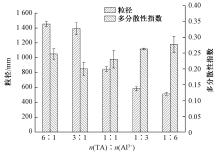
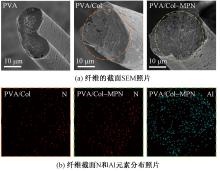
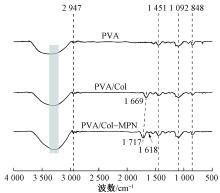
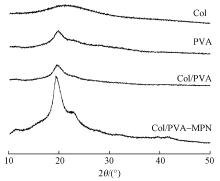
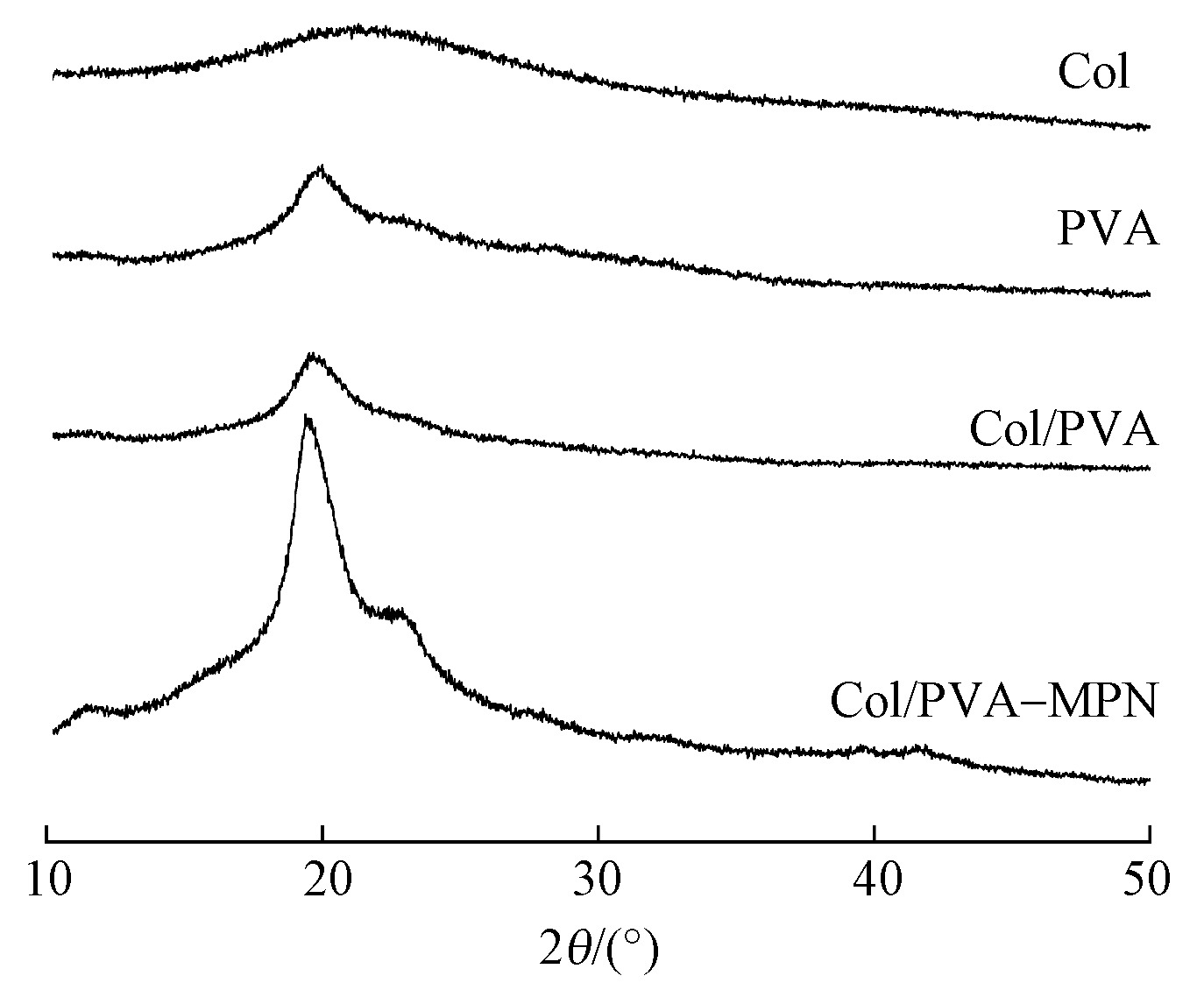
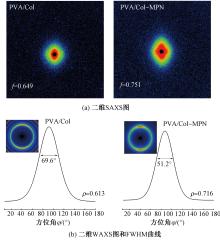
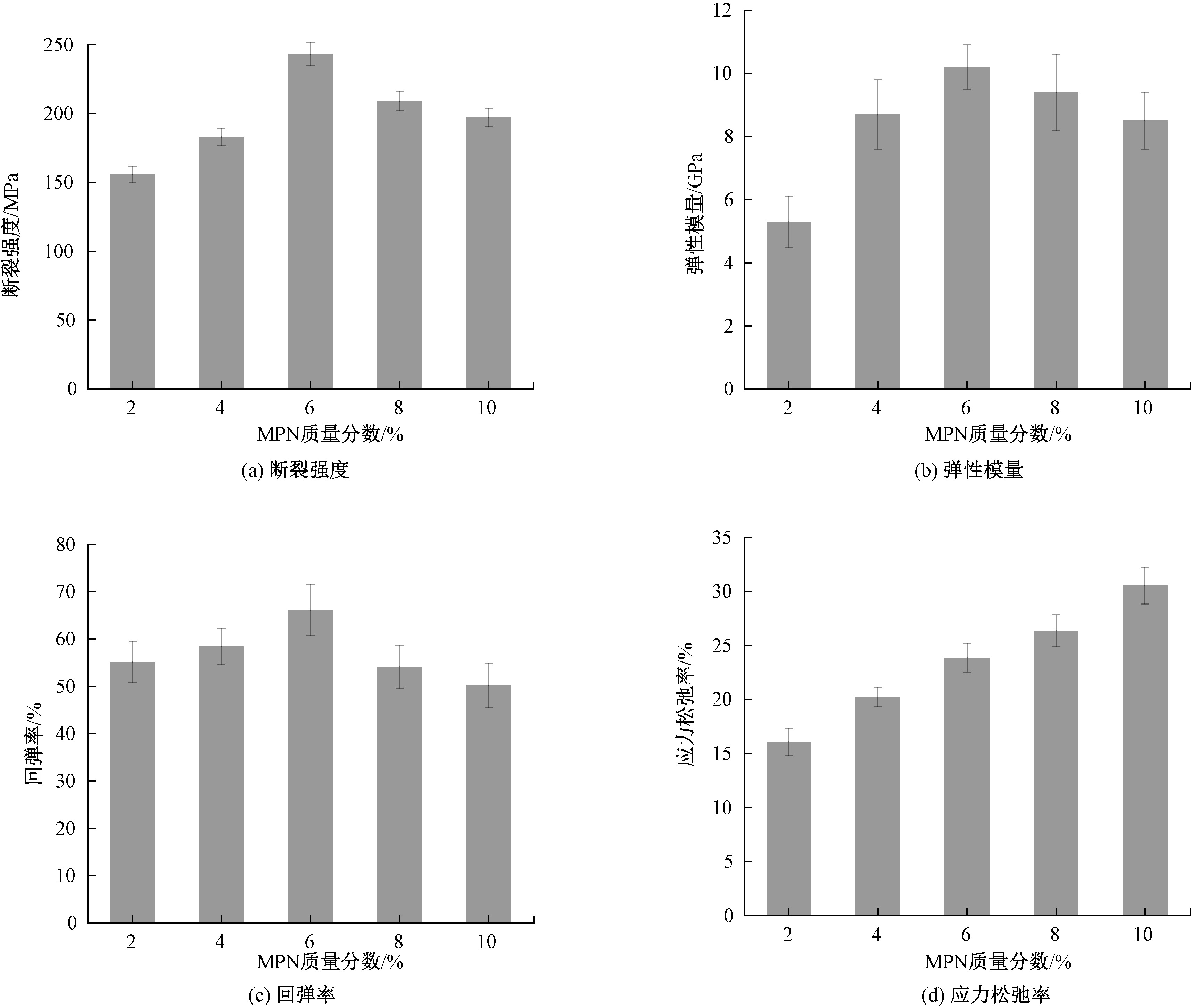
摘要: 为解决再生胶原蛋白基纤维水化程度高、力学性能差、蛋白留存率低等问题,采用从制革废弃物中提取的胶原蛋白与可生物降解的聚乙烯醇(PVA)进行共混纺丝,并引入金属-多酚网络(MPN)进行交联,构建金属配位-氢键双交联网络,制备了具有高蛋白留存率和优异力学性能的复合纤维。借助粒径分析仪和Zeta电位仪探讨了单宁酸(TA)与Al3+的最佳量比及MPN用量对复合纤维性能的影响。结果表明:TA与Al3+的量比为3∶1时,MPN组装使Zeta电位由-2.83 mV降低至-38.58 mV,体系稳定性最佳;MPN的加入通过金属配位键与氢键的协同作用,使胶原蛋白与聚乙烯醇有效交联;MPN的引入提高了复合纤维的结晶度和取向度;当MPN添加量为6%时,复合纤维的断裂强度达到243 MPa,蛋白留存率提高了2倍。本研究为制革固体废弃物的高值化利用及纺织行业的可持续发展提供了新的技术路径。
中图分类号:
| [1] | 闵雯. 胶原蛋白复合纤维的制备[D]. 北京: 北京服装学院, 2012: 1-5. |
| MIN Wen. Preparation of collagen composite fiber[D]. Beijing: Beijing Institute of Fashion Technology, 2012: 1-5. | |
| [2] | SUN Xuantong, WANG Xi, SUN Fengqiang, et al. Textile waste fiber regeneration via a green chemistry approach: a molecular strategy for sustainable fashion[J]. Advanced Materials, 2021. DOI: 10.1002/adma.202105174. |
| [3] | 郭晓晓, 张红霞, 祝成炎, 等. 桑蚕丝/胶原蛋白锦纶丝交织物的性能研究[J]. 丝绸, 2020, 57(7): 15-18. |
| GUO Xiaoxiao, ZHANG Hongxia, ZHU Chengyan, et al. Study on the properties of mulberry silk/collagen nylon silk interwoven fabrics[J]. Journal of Silk, 2020, 57(7): 15-18. | |
| [4] | 魏伟, 张耀鹏, 赵瀛梅, 等. 再生丝素蛋白水溶液的干法纺丝[J]. 功能高分子学报, 2009, 22(3): 229-236. |
| WEI Wei, ZHANG Yaopeng, ZHAO Yingmei, et al. Dry spinning of regenerated silk protein aqueous solution[J]. Journal of Functional Polymers, 2009, 22(3): 229-236. | |
| [5] | SIONKOESKA A, ADAMIAK K, MUSIAL K, et al. Collagen based materials in cosmetic applications: a review[J]. Materials, 2020. DOI: 10.3390/ma13194217. |
| [6] | 林云周, 胶原蛋白/聚乙烯醇复合纤维的制备及其结构与性能研究[D]. 成都: 四川大学, 2006: 1-10. |
| LIN Yunzhou. Preparation of collagen/poly(vinyl alcohol) composite fibers and their structure and properties[D]. Chengdu: Sichuan University, 2006: 1-10. | |
| [7] | 岳程飞, 丁长坤, 李璐, 等. 碳化二亚胺/羟基丁二酰亚胺交联改性胶原蛋白纤维制备及其性能[J]. 纺织学报, 2020, 41 (3): 1-7. |
| YUE Chengfei, DING Changkun, LI Lu, et al. Preparation of carbodiimide/hydroxysuccinimide cross-linked modified collagen fibers and their properties[J]. Journal of Textile Research, 2020, 41 (3): 1-7. | |
| [8] |
EJIMA Hirotaka, RICHARDSON Joseph J, LIANG Kang, et al. One-step assembly of coordination complexes for versatile film and particle engineering[J]. Science, 2013, 341(6142): 154-157.
doi: 10.1126/science.1237265 pmid: 23846899 |
| [9] |
DAI Yunlu, CHENG Siyuan, WANG Zhongliang, et al. Hypochlorous acid promoted platinum drug chemotherapy by myeloperoxidase-encapsulated therapeutic metal phenolic nanoparticles[J]. ACS Nano, 2018, 12(1): 455-463.
doi: 10.1021/acsnano.7b06852 pmid: 29293312 |
| [10] | WANG Zhong, KANG Haijiao, ZHANG Wei, et al. Improvement of interfacial interactions using natural polyphenol-inspired tannic acid-coated nanoclay enhancement of soy protein isolate biofilms[J]. Applied Surface Science, 2017, 401: 271-282. |
| [11] | 秦洋. 玉米淀粉基水凝胶网络的构建及性能研究[D]. 无锡: 江南大学, 2021: 72-80. |
| QIN Yang, Construction and performance study of corn starch-based hydrogel network[D]. Wuxi: Jiangnan University, 2021: 72-80. | |
| [12] | LAN Tian, SHI Jiajia, DONG Yabo, et al. Optimizing texture and mechanical properties: the impact of pH-modulated metal-phenolic networks on soy protein isolate gels[J]. Food Hydrocolloids, 2024. DOI: 10.1016/j.foodhyd.2024.110011. |
| [13] |
HE Yuan, YE Zhuyifan, LIU Xinyang, et al. Can machine learning predict drug nanocrystals[J]. Journal of Controlled Release, 2020, 322: 274-285.
doi: S0168-3659(20)30195-4 pmid: 32234511 |
| [14] | 庞宇轩, 铁基胶体结构的构建及其应用研究[D]. 广州: 华南理工大学, 2022: 23-40. |
| PANG Yuxuan, Construction of iron-based colloidal structures and their applications[D]. Guangzhou: South China University of Technology, 2022: 23-40. | |
| [15] | 王倩, 裴洪艳, 高至亮, 等. 刺激响应性金属-多酚胶囊的可控组装及其在药物递送中的应用[J]. 科学通报, 2021, 66 (14): 1783-1792. |
| WANG Qian, PEI Hongyan, GAO Zhiliang, et al. Controlled assembly of stimuli-responsive metal-polyphenol capsules and their application in drug delivery[J]. Science Bulletin, 2021, 66 (14): 1783-1792. | |
| [16] | LIU Zhigao, CHEN Tao, HU Chaohao, et al. Calculation and analysis of interaction between characteristic functional group of persimmon tannin and metal ions[J]. Acta Physica Sinica, 2021. DOI:10.7498/aps.70.20201947. |
| [17] | WANG Yanli, HE Junwei, ZOU Liming, et al. High performance polyvinyl alcohol/lignin fibers with excellent mechanical and water resistance properties[J]. International Journal of Biological Macromolecules, 2024. DOI: 10.1016/j.ijbiomac.2024.131244. |
| [18] | ZHANG Lei, WANG Kai, WENG Sen, et al. Super strong and tough anisotropic hydrogels through synergy of directional freeze-casting, metal complexation and salting out[J]. Chemical Engineering Journal, 2023. DOI: 10.1016/j.cej.2023.142414. |
| [19] | MIAO Xiaonan, LI Zhangpeng, HOU Kaiming, et al. Bioinspired multi-crosslinking and solid-liquid composite lubricating MXene/PVA hydrogel based on salting out effect[J]. Chemical Engineering Journal, 2023. DOI: 10.1016/j.cej.2023.146848. |
| [20] | CHENG Yu, LIN Jiaxian, ZHENG Yunayaun, et al. High-performance gel-spun poly(vinyl alcohol) fibers reinforced by organosolv lignin-graft-poly(acrylic acid)[J]. Industrial & Engineering Chemistry Research, 2022, 61(17): 6037-6051. |
| [21] | WANG Sha, JIANG Feng, XU Xu, et al. Super-strong, super-stiff macrofibers with aligned, long bacterial cellulose nanofibers[J]. Advanced Materials, 2017. DOI: 10.1002/adma.201702498. |
| [22] |
LU Chuanwei, WANG Chunpeng, ZHANG Daihui, et al. Ultra-strong hydroxypropyl cellulose/polyvinyl alcohol composite hydrogel by combination of triple-network and mechanical training[J]. International Journal of Biological Macromolecules, 2021, 184: 200-208.
doi: 10.1016/j.ijbiomac.2021.06.054 pmid: 34126151 |
| [23] | XIAO Yao, YANG Ze, GUO Baoling, et al. Strong and tough biofibers designed by dual crosslinking for sutures[J]. Advanced Functional Materials, 2023. DOI: 10.1002/adfm.202313131. |
| [1] | 高闻语, 陈诚, 奚晓玮, 邓林红, 刘杨. 改性丝素蛋白纤维增强胶原基角膜修复材料的制备及其性能[J]. 纺织学报, 2025, 46(08): 1-9. |
| [2] | 陈晴宇, 陆春红, 张斌, 晋义凯, 黄琪帏, 王超, 丁彬, 俞建勇, 王先锋. 碳纤维增强水泥基灌浆料的制备及其性能[J]. 纺织学报, 2025, 46(08): 120-126. |
| [3] | 沈忱思, 王欣悦, 李方. 退浆废水预氧化-絮凝一体化处理及资源化技术[J]. 纺织学报, 2025, 46(08): 173-182. |
| [4] | 岳航, 鹿超, 王春红, 李瀚宇. 基于主要化学成分的红麻与大麻拉伸强度预测[J]. 纺织学报, 2025, 46(08): 62-70. |
| [5] | 王清清, 廖师琴, 魏取福. 光电双响应纱线应变传感器的制备及其性能[J]. 纺织学报, 2025, 46(08): 71-79. |
| [6] | 朱雷, 李晓俊, 程春祖, 徐纪刚, 杜心宇. 四硼酸钠/单宁酸交联对海藻酸钙纤维结构与性能的影响[J]. 纺织学报, 2025, 46(07): 28-36. |
| [7] | 刘宇祥, 乌婧, 徐锦龙, 谢锐敏, 王华平. 阳离子可染聚对苯二甲酸丙二醇酯预取向丝的制备及其性能[J]. 纺织学报, 2025, 46(07): 46-52. |
| [8] | 陈亚娟, 郭瀚宇, 张陈恬, 李欣欣, 张雪萍. 聚乙烯醇/海藻酸钠/锦纶66复合水凝胶包芯纱的制备及其吸湿性能[J]. 纺织学报, 2025, 46(06): 103-110. |
| [9] | 谭文萍, 张硕, 张倩, 张寅, 刘润政, 黄晓卫, 明津法. 聚乳酸纤维气凝胶制备及其辐射制冷性能[J]. 纺织学报, 2025, 46(06): 63-72. |
| [10] | 王春翔, 李姣, 解开放, 薛宏坤, 徐广标. 天麻多糖/聚乙烯醇静电纺抗菌保鲜膜的制备与性能[J]. 纺织学报, 2025, 46(06): 73-79. |
| [11] | 时晓聪, 陈莉, 杜迅. 茜素-聚乳酸/胶原蛋白纳米纤维膜的制备及其氨气检测性能[J]. 纺织学报, 2025, 46(05): 143-150. |
| [12] | 郭羽晴, 屈芸, 张利平, 孙洁. 芳纶纳米纤维制备及其可纺性[J]. 纺织学报, 2025, 46(04): 1-10. |
| [13] | 刘锦锋, 杜康存, 肖畅, 付少海, 张丽平. 多孔MXene/热塑性聚氨酯纤维的制备及其应力应变传感性能[J]. 纺织学报, 2025, 46(03): 41-48. |
| [14] | 李金键, 薛元, 陈宥融. 时序分布的段彩竹节纱及三通道转杯成纱工艺设计[J]. 纺织学报, 2025, 46(03): 72-81. |
| [15] | 王小艳, 杨书康, 肖国威, 杜金梅, 许长海. 光响应螺噁嗪掺杂长余辉发光纤维的制备及其性能[J]. 纺织学报, 2025, 46(02): 1-9. |
|
||
 京公网安备11010502044800号