纺织学报 ›› 2025, Vol. 46 ›› Issue (12): 133-141.doi: 10.13475/j.fzxb.20250301001

• 染整工程 • 上一篇    下一篇

液态靛蓝染料的制备及其对棉织物的染色性能

宋佳怡1,2,3, 王政驿1,2, 程献伟1,2,3(), 关晋平1,2, 朱亚伟1,2,3   

  1. 1.苏州大学 纺织与服装工程学院, 江苏 苏州 215123
    2.苏州大学 纺织行业纺织材料阻燃整理重点实验室,江苏 苏州 215123
    3.苏州大学 江苏省纺织印染节能减排与清洁生产工程研究中心, 江苏 苏州 215123
  • 收稿日期:2025-03-06 修回日期:2025-09-17 出版日期:2025-12-15 发布日期:2026-02-06
  • 通讯作者: 程献伟(1992—),男,副教授,博士。主要研究方向为生物质化学品及功能性纺织品加工理论与技术。E-mail: chengxianwei@suda.edu.cn
  • 作者简介:宋佳怡(1998—),女,硕士生。主要研究方向为天然染料染色和纺织品阻燃整理。
  • 基金资助:
    苏州市产业前瞻与关键核心技术项目(SYC2022017);国家自然科学基金青年科学基金项目(22408247)

Preparation of liquid indigo dye and its dyeing performance on cotton fabrics

SONG Jiayi1,2,3, WANG Zhengyi1,2, CHENG Xianwei1,2,3(), GUAN Jinping1,2, ZHU Yawei1,2,3   

  1. 1. College of Textile and Clothing Engineering, Soochow University, Suzhou, Jiangsu 215123, China
    2. Key Laboratory of Flame Retardancy Finishing of Textile Materials (CNTAC), Soochow University, Suzhou, Jiangsu 215123, China
    3. Jiangsu Engineering Research Center of Textile Dyeing and Printing for Energy Conservation, Discharge Reduction and Cleaner Production (ERC), Soochow University, Suzhou, Jiangsu 215123, China
  • Received:2025-03-06 Revised:2025-09-17 Published:2025-12-15 Online:2026-02-06

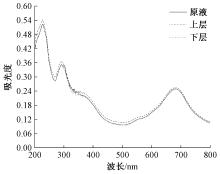
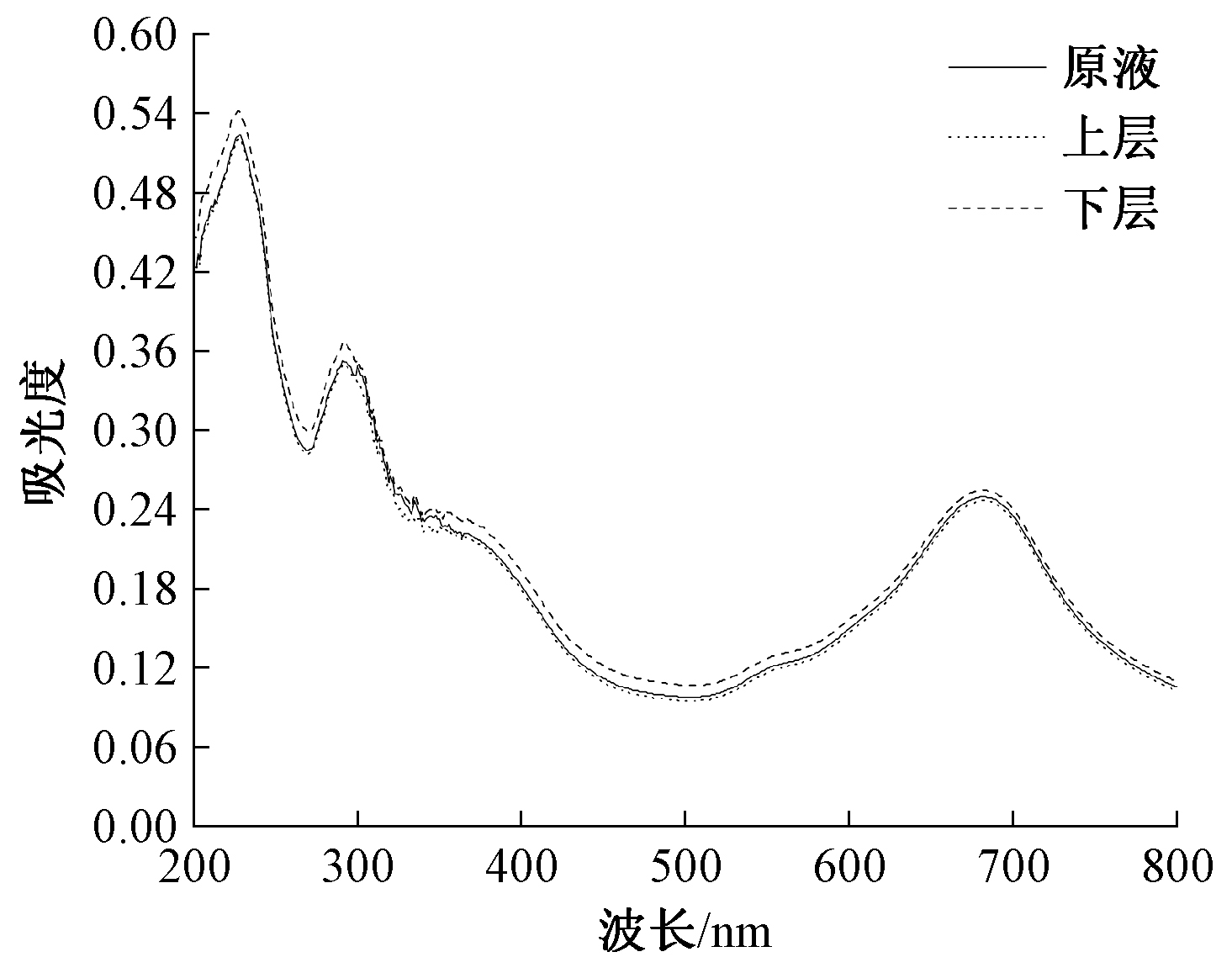
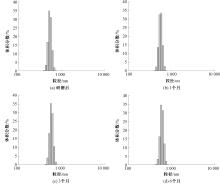
摘要: 粉状靛蓝染料在染色过程中存在染料利用率低、使用时易产生粉尘及废水排放量大等问题,通过施加高剪切力,使染料颗粒集群破裂为尺寸更小的颗粒,并借助表面活性剂的作用实现稳定分散,制备得到液态靛蓝染料。考察了粉状和液态靛蓝染料的吸光度、液态染料的放置稳定性及其流变性能;探究了氢氧化钠和保险粉质量浓度、还原时间、浸轧次数对染色棉织物表观色深(K/S值)与耐干湿摩擦色牢度的影响,并对比了相同浓度下液态与粉态染料染色效果,评价了染色织物的抗紫外线性能和抗菌性能。结果表明:液态靛蓝染料经稀释5万倍后放置24 h,其上下层吸光度分别为0.247和0.255,放置半年后,平均粒径由543 nm增至656 nm,显示出良好的稳定性;液态靛蓝染料的表观黏度随剪切速率增加而降低,表现出假塑性流体特征;在相同用量下,液态靛蓝染料染色棉织物的K/S值高于粉态靛蓝染料染色样品,其中当质量浓度为10 g/L时,染色棉织物的K/S值较粉态染料染色提升49.3%,且耐干湿摩擦色牢度均达到3级及以上;此外,液态靛蓝染料染色棉织物还具有优异的抗紫外线性能和一定的抗菌性能。液态靛蓝染料能够显著提升靛蓝染色效率与织物功能性,展现出良好的应用前景。

关键词: 液态染料, 植物靛蓝, 棉织物, 流变性能, 染色性能, 抗紫外线性能, 抗菌性能

Abstract:

Objective Although powdered natural indigo is convenient for storage and transportation, it readily forms soft agglomerates in aqueous media due to electrostatic adsorption during dyeing. These aggregates are difficult to disperse by stirring, leading to low dye utilization, dust generation, and excessive wastewater in industrial production. Preparing liquid indigo dyes offers a promising solution by reducing particle size, enhancing reduction efficiency and dye uptake, and eliminating dust at its source.

Method A dispersion was prepared by mixing 30 g of vegetable indigo, 3 g of abrasive MF-2000A, 0.9 g of viscosity modifier Z5, and 63.1 g of water, followed by stirring at 600-700 r/min for 15 min. The mixture was transferred into a custom grinder, combined with 100-150 g of zirconium beads, and ground at 1 700-1 900 r/min. Particle size was monitored every 30 min with adjustments in grinding speed, and grinding was terminated once particle size plateaued. The resulting suspension was filtered through silk crepe de chine to achieve a 30% liquid indigo dye. The dipping process for dyeing cotton fabrics with 10 g/L liquid indigo was then optimized via single-factor experiments at a fixed dyeing temperature of 60 ℃ and subsequent steaming at 102 ℃ for 30 s. Finally, cotton fabrics dyed with 5-25 g/L liquid or powdered indigo were evaluated and compared in terms of K/S, L*, a*, b* values, rubbing and soaping fastness, as well as UV protection and antibacterial performance.

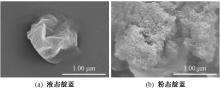
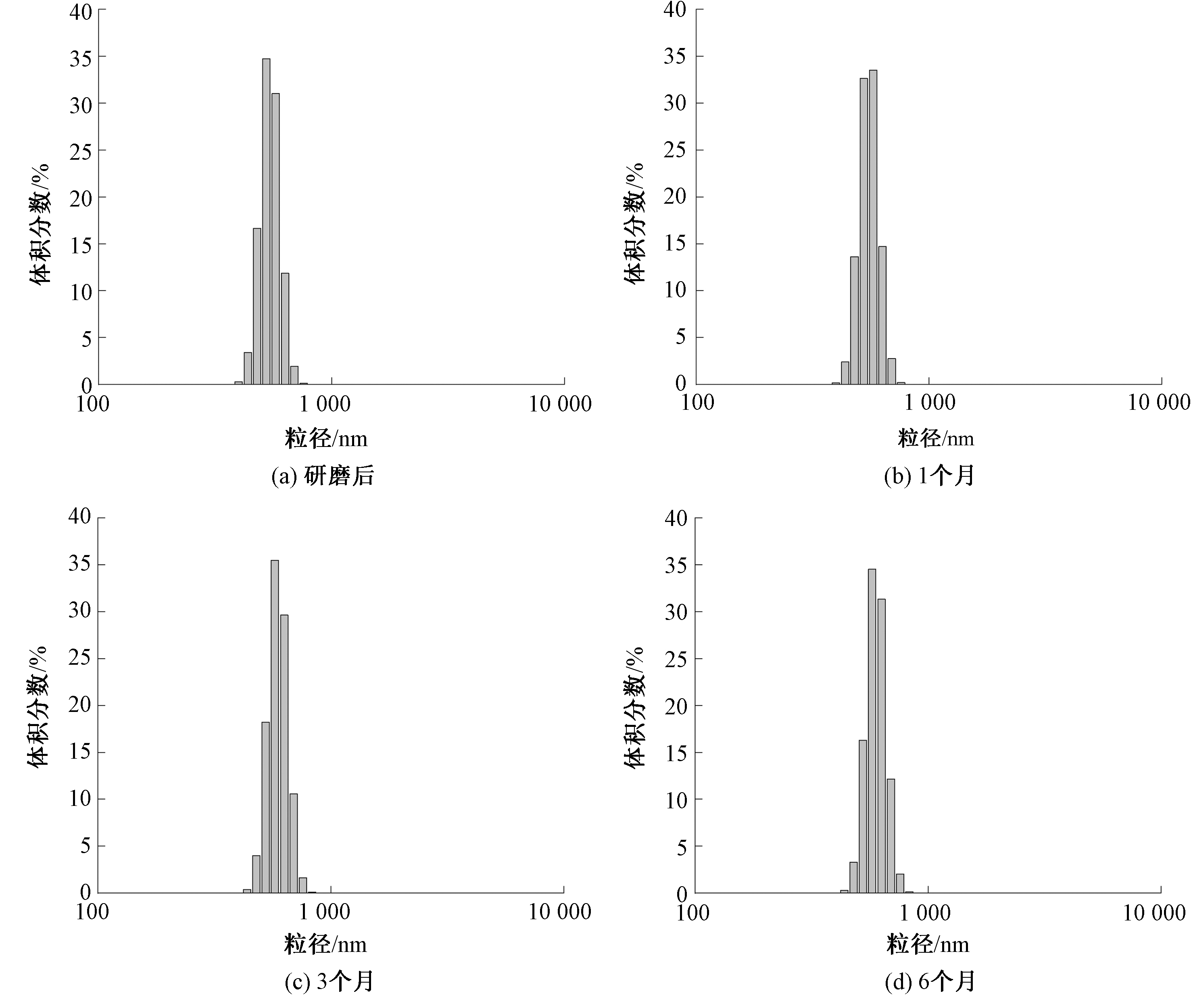
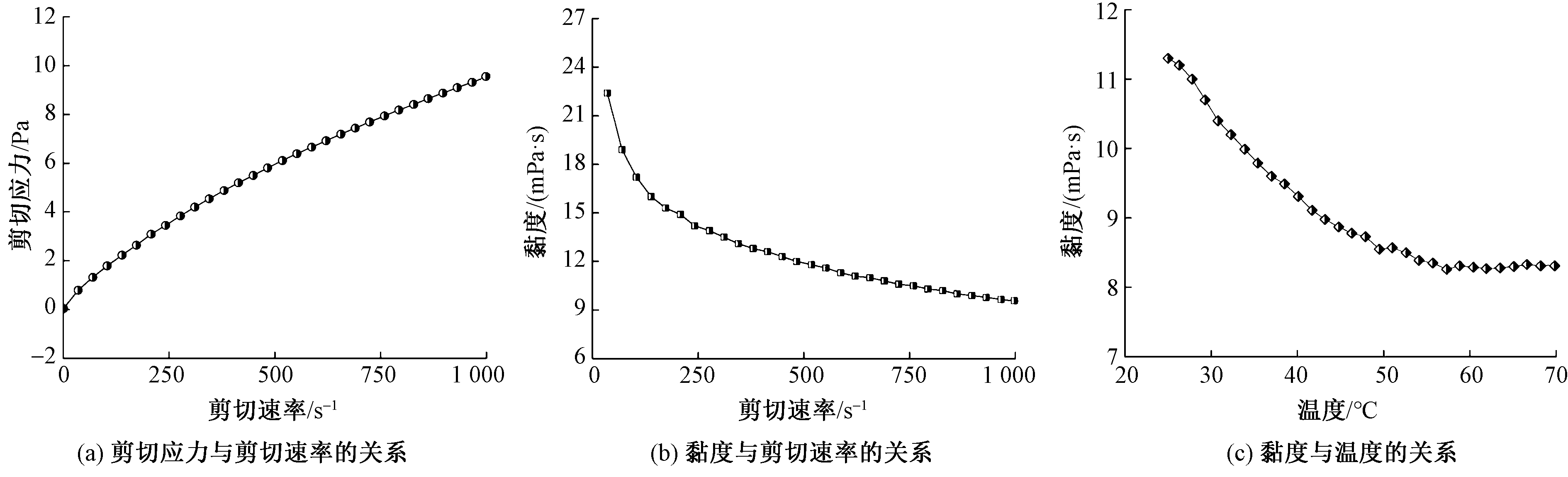
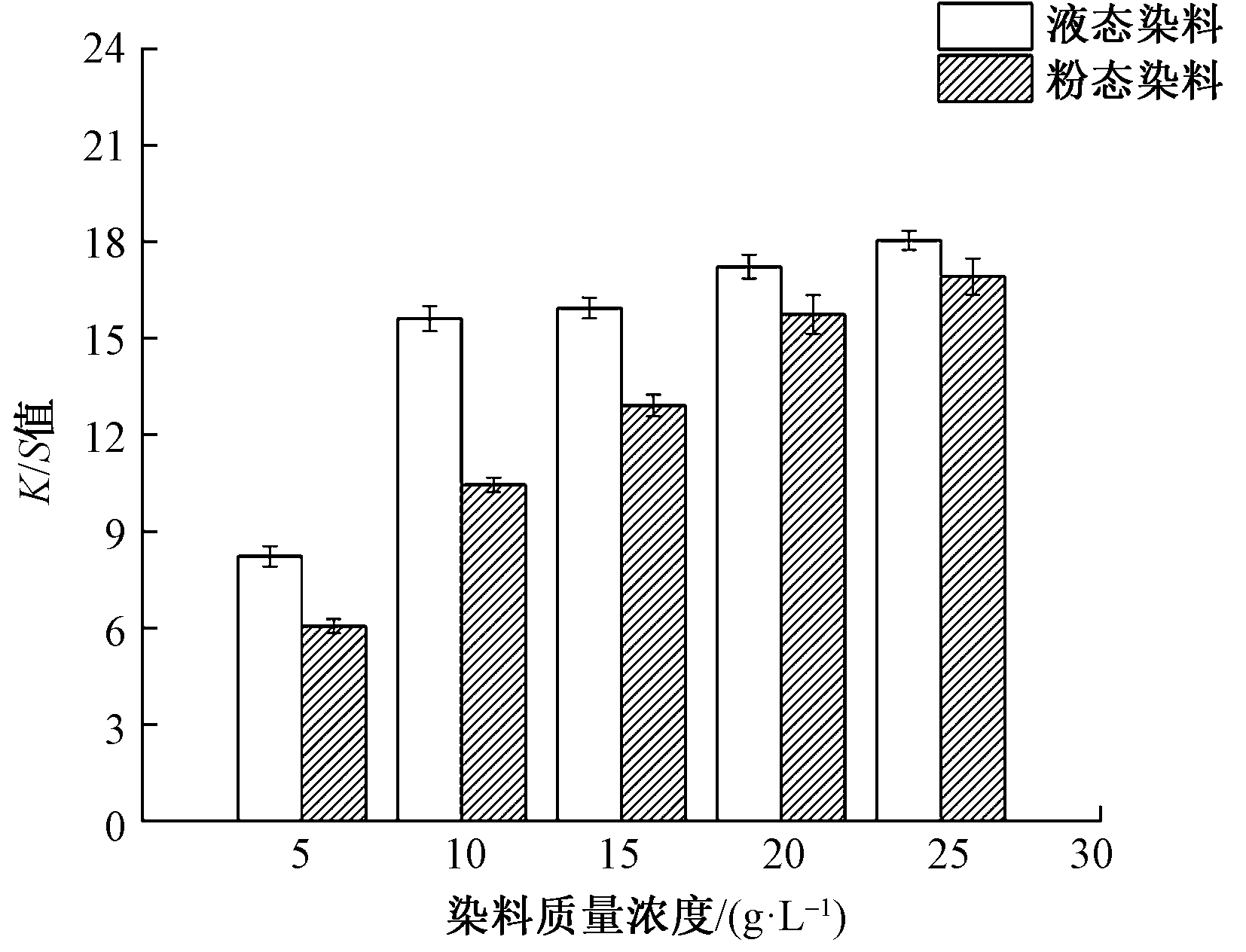
Results After grinding, the liquid indigo dye exhibited an average particle size of 543 nm with a polydispersity index of 0.01, which only increased to 656 nm after six months of storage, indicating excellent stability. Upon 50 000-fold dilution and 24 h storage, the absorbance change was merely 3.2%. MF-2000A facilitated ultrafine dispersion by preventing particle re-aggregation, while Z5 coated suspended particles to reduce interparticle friction and inhibiting sedimentation. The viscosity of the liquid dye decreased rapidly with increasing shear rate or temperature, consistent with pseudoplastic fluid behavior. In optimized conditions (10 g/L liquid indigo, 3 g/L NaOH, 12 g/L sodium hydrosulfite, 15 min reduction, six dips), the K/S value reached 15.61. The dyed fabrics achieved rubbing fastness of more than 3, soaping fastness of more than 3, UVA transmittance of 1.07, UVB transmittance of 1.15, and an ultraviolet protection factor of 90.19. Additionally, the antibacterial activity against Escherichia coli increased to 70%. Compared with powdered indigo, liquid indigo improved K/S values of cotton fabrics by 6.6%-49.3% across 5-25 g/L dye concentrations. This improvement arises from the finer particle size and absence of agglomeration, which enhance dye reduction and fabric wettability, while powdered dyes form agglomerates through van der Waals and hydrogen bonding interactions, reducing their effective surface area and diminishing reduction efficiency.

Conclusion The prepared liquid indigo dye demonstrated excellent storage stability, pseudoplastic rheology, and superior dyeing performance compared with powdered indigo. The optimal process parameters were a dye/NaOH/sodium hydrosulfite ratio of 1∶1∶4, a 15 min pre-reduction time, and six dipping cycles. At 10 g/L, liquid indigo increased the K/S value of dyed cotton fabrics by 49.3% relative to powdered indigo, while also imparting strong UV protection and moderate antibacterial activity.

Key words: liquid dye, plant indigo, cotton fabric, rheological property, dyeing property, UV protection, antibacterial property

中图分类号: 

  • TS194.2

图1

液态靛蓝和粉态靛蓝的扫描电子显微镜照片"

图2

液态靛蓝染料放置后不同位置悬浮体的吸光度曲线"

图3

液态靛蓝染料放置不同时间的粒径分布图"

表1

液态靛蓝剪切应力的一元线性回归方程"

C1 C2 R2 F P
1.0809 0.009 0.982 1574.9 0.0001

表2

液态靛蓝黏度的Morgan-Mercer-Florin方程"

模拟曲线 C3 C4 C5 C6 R2 F P
黏度-剪切速率曲线 -35.624 1 -0.995 8 -35.282 9 0.000 5 0.990 7 918.6 0.000 1
黏度-温度曲线 6.571 1 -30.585 9 6.742 1 0.606 5 0.985 5 589.0 0.000 1

图4

液态靛蓝色素的流变性能"

图5

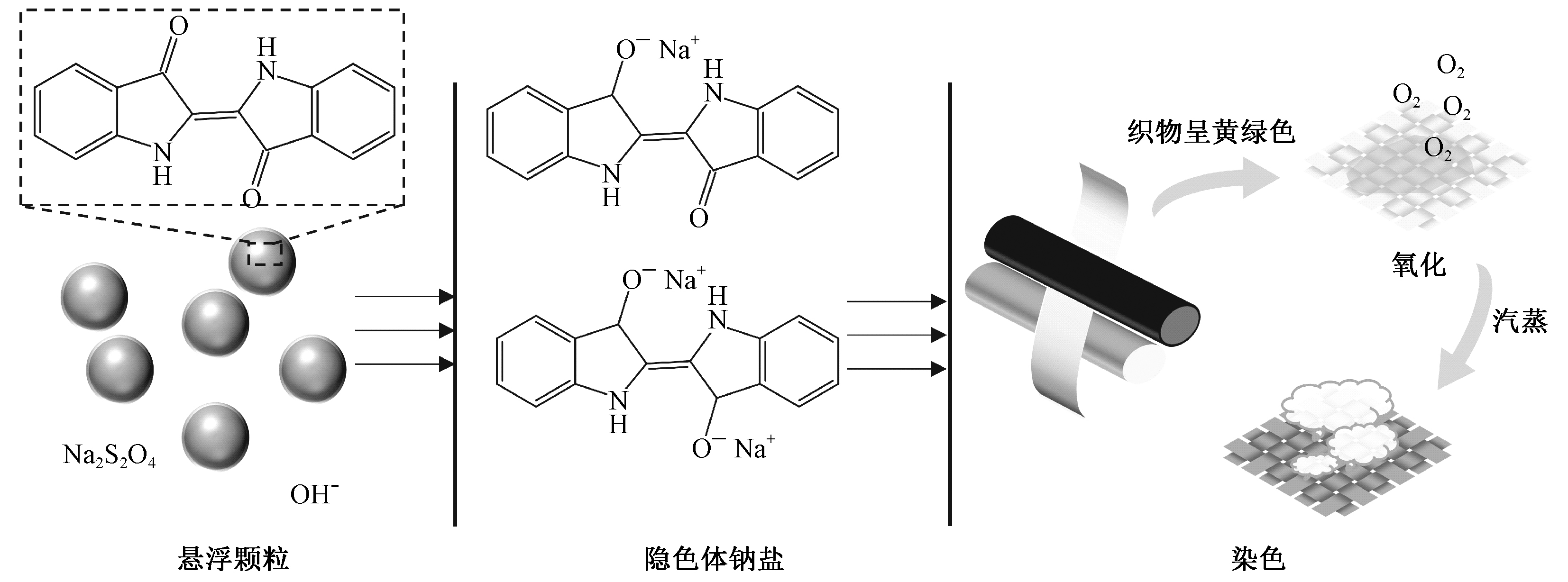
靛蓝浸轧染色原理及工艺"

表3

氢氧化钠质量浓度对颜色特征值与耐摩擦色牢度的影响"

氢氧化钠
质量浓度/
(g·L-1)
pH值 L* a* b* 耐摩擦色牢度/级
湿
1.0 6.4 62.01 -2.20 -24.89 4~5 4
1.5 7.5 52.67 -2.27 -26.96 4~5 4
2.0 10.9 40.30 -0.80 -26.92 4 3~4
2.5 11.7 37.79 -1.18 -26.40 4 3
3.0 11.9 30.97 0.01 -23.77 4 3
3.5 12.2 35.97 -0.39 -25.39 4 3

图6

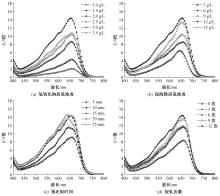
氢氧化钠和保险粉质量浓度、预还原时间和浸轧次数对液态靛蓝上染棉织物K/S值的影响"

图7

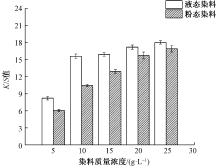
粉态与液态靛蓝染色上染棉织物K/S值对比"

表4

不同粉态和液态靛蓝染料用量染色棉织物的颜色特征值和色牢度"

染料
种类
染料质量
浓度/
(g·L-1)
L* a* b* 耐摩擦色
牢度/级
耐皂洗
色牢度/
湿
液态
染料
5 41.79 -4.04 -22.66 4~5 4 4
10 30.97 0.01 -23.77 4 3 4
15 28.75 -0.62 -21.21 3~4 2~3 3~4
20 25.59 0.78 -19.94 3 2~3 3~4
25 24.07 1.18 -18.96 3 2~3 3~4
粉态
染料
1.5 46.29 -5.30 -21.42 4~5 4 4
3.0 38.97 -0.98 -26.52 4~5 4 4
4.5 33.94 -3.34 -21.41 4 3 3~4
6.0 29.77 -2.08 -20.78 3~4 2~3 3~4
7.5 28.18 -1.77 -20.07 3 2~3 3

图8

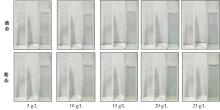
不同质量浓度液态和粉态靛蓝染料染色织物的耐皂洗色牢度"

表5

染色织物的抗紫外线性能及对大肠埃希菌的抑菌率"

织物 抗紫外线性能 抑菌
率/%
TUVA/% TUVB/% UPF
原棉织物 4.07 7.84 13.03
染色棉织物 1.07 1.15 90.19 70
[1] 张玉. 还原剂SRP还原天然靛蓝染色机理及性能研究[D]. 上海: 东华大学, 2019:3-15.
ZHANG Yu. Study on the reduction mechanism and performance of reducing agent SRP for natural indigo dyeing[D]. Shanghai: Donghua University, 2019:3-15.
[2] 何贵东, 周立明, 段凌, 等. 植物靛蓝对棉织物的环保染色工艺研究[J]. 纺织报告, 2023, 42(4): 16-19.
HE Guidong, ZHOU Liming, DUAN Ling, et al. Research on environmental protection dyeing technology of cotton fabric with natural indigo[J]. Textile Reports, 2023, 42(4): 16-19.
[3] SAIKHAO L, SETTHAYANOND J, KARPKIRD T, et al. Mao berry as a green reducing agent in natural indigo dyeing on cotton fabrics[J]. The Journal of the Textile Institute, 2022, 113(8): 1538-1544.
doi: 10.1080/00405000.2021.1936793
[4] 王碧峤, 王静, 姜晓巍, 等. 棉织物植物靛蓝/D5体系染色工艺[J]. 上海纺织科技, 2023, 51(5): 27-30, 37.
WANG Biqiao, WANG Jing, JIANG Xiaowei, et al. Dyeing process of cotton fabric with plant indigo/decamethylcyclopentasiloxane system[J]. Shanghai Textile Science & Technology, 2023, 51(5): 27-30, 37.
[5] 崔向海, 董廷尉, 侯圣利. 电解靛蓝环保染色技术在牛仔布行业的应用[J]. 中国纺织, 2022(S2): 96-98.
CUI Xianghai, DONG Tingwei, HOU Shengli. Application of electrolytic indigo environmental protection dyeing technology in denim industry[J]. China Textile, 2022(S2): 96-98.
[6] BIDART G N, TEZE D, JANSEN C U, et al. Chemoenzymatic indican for light-driven denim dyeing[J]. Nature Communications, 2024, 15: 1489.
doi: 10.1038/s41467-024-45749-3 pmid: 38413572
[7] 潘婷, 马小强. 植物靛蓝葡萄糖还原及其在阳离子改性棉上染色研究[J]. 武汉职业技术学院学报, 2023, 22(4): 116-120.
PAN Ting, MA Xiaoqiang. Study on the reduction of plant indigo glucose and its dyeing on cationic modified cotton[J]. Journal of Wuhan Polytechnic, 2023, 22(4): 116-120.
[8] 杨书伟. 靛蓝牛仔布增深染色、色牢度提升工艺及机理研究[D]. 杭州: 浙江理工大学, 2021:1-15.
YANG Shuwei. Research on deep dyeing, color fastness improvement processes and mechanisms of indigo denim[D]. Hangzhou: Zhejiang Sci-Tech University, 2021:1-15.
[9] 丁志平. 免蒸洗液态分散染料及碳中和印染技术研究进展[J]. 江苏丝绸, 2022, 51(2): 8-12, 48.
DING Zhiping. Research progress of non-steaming liquid disperse dyes and carbon neutral printing and dyeing technology[J]. Jiangsu Silk, 2022, 51(2): 8-12, 48.
[10] 艾丽, 朱亚伟. 液体分散染料研发技术现状及其应用前景[J]. 纺织学报, 2023, 44(5): 220-227.
AI Li, ZHU Yawei. Technology progress and application prospects of liquid disperse dyes[J]. Journal of Textile Research, 2023, 44(5): 220-227.
doi: 10.1177/004051757404400314
[11] 侯江波. 天然染料茜草对涤纶纤维的染色性能研究[J]. 染料与染色, 2022, 59(6): 22-24.
HOU Jiangbo. Study on dyeing process of polyester fiber with natural dyestuff alizarin[J]. Dyestuffs and Coloration, 2022, 59(6): 22-24.
[12] 石瑜博, 艾丽, 肖瀛洲, 等. 水基液体分散染料的放置稳定性评价研究[J]. 丝绸, 2021, 58(7): 44-50.
SHI Yubo, AI Li, XIAO Yingzhou, et al. Study on the evaluation of the storage stability of water-based liquid disperse dyes[J]. Journal of Silk, 2021, 58(7): 44-50.
[1] 候志文, 任泽苹, 王晓宁, 张天骄. 棉织物的壳聚糖/海藻酸盐抗菌阻燃整理及其性能[J]. 纺织学报, 2025, 46(12): 171-180.
[2] 王梁宇, 高晓红, 于彩娇, 张雪婷, 杨旭礼. 还原氧化石墨烯/铜纳米颗粒导电棉织物的制备及其传感性能[J]. 纺织学报, 2025, 46(12): 181-187.
[3] 龙红霞, 吴伟, 刘娅岚, 徐红, 毛志平. 纤维素纤维孔道吸湿溶胀行为的分子动力学模拟[J]. 纺织学报, 2025, 46(11): 155-163.
[4] 马颖媛, 李建芳, 胡毅. 活性红195在异构烷烃体系中对蚕丝织物的少水染色性能[J]. 纺织学报, 2025, 46(11): 178-187.
[5] 张帆, 蔡再生, 刘慧景, 陆少锋, 黄旭明. 高牢固光致变色棉织物的点击化学法制备及其性能[J]. 纺织学报, 2025, 46(11): 196-202.
[6] 王子涵, 李勇, 陈晓川, 汪军, 梁凌杰. 废旧棉织物破碎加工过程的建模与仿真[J]. 纺织学报, 2025, 46(07): 136-143.
[7] 徐丽亚, 汪瑱, 杨鸿杰, 汪蔚. 氧化锌-银/生物基聚酰胺56纳米纤维膜的制备及其抗菌性能[J]. 纺织学报, 2025, 46(07): 37-45.
[8] 刘宇祥, 乌婧, 徐锦龙, 谢锐敏, 王华平. 阳离子可染聚对苯二甲酸丙二醇酯预取向丝的制备及其性能[J]. 纺织学报, 2025, 46(07): 46-52.
[9] 郭羽晴, 屈芸, 张利平, 孙洁. 芳纶纳米纤维制备及其可纺性[J]. 纺织学报, 2025, 46(04): 1-10.
[10] 赵强强, 王韩星, 张奉轩, 何瑾馨, 周俊, 周兆昌, 董霞. 聚六亚甲基双胍盐酸盐改性对棉织物耐日晒色牢度的影响[J]. 纺织学报, 2025, 46(04): 109-118.
[11] 黄春月, 黄鑫, 杜海娟, 徐文杰, 杨雪梅, 万科研, 李旭, 高杰. 钼氧簇复合物整理剂制备及其整理棉织物的防紫外线性能[J]. 纺织学报, 2025, 46(04): 138-145.
[12] 廖喜林, 曾媛, 刘淑萍, 李亮, 李淑静, 刘让同. 磷/氮/硅复配协效阻燃棉织物制备及其性能[J]. 纺织学报, 2025, 46(03): 151-157.
[13] 乔思杰, 邢桐贺, 童爱心, 史芷丞, 潘恒, 刘可帅, 余豪, 陈凤翔. 不同聚乳酸材料的性能对比[J]. 纺织学报, 2025, 46(03): 27-33.
[14] 解晓康, 江华, 王也, 石璐璐. α-(三氟甲基)苯基重氮酯型染料与合成纤维的反应机制[J]. 纺织学报, 2025, 46(02): 145-152.
[15] 张洁, 郭鑫源, 关晋平, 程献伟, 陈国强. 磷/氮阻燃剂原位沉积对棉织物的耐久阻燃改性[J]. 纺织学报, 2025, 46(02): 180-187.
Viewed
Full text


Abstract

Cited

  Shared   
  Discussed   
No Suggested Reading articles found!