纺织学报 ›› 2026, Vol. 47 ›› Issue (1): 20-28.doi: 10.13475/j.fzxb.20250404201
赵婧雯, 袁香楠, 高晶( ), 王璐
), 王璐
ZHAO Jingwen, YUAN Xiangnan, GAO Jing(), WANG Lu
摘要:
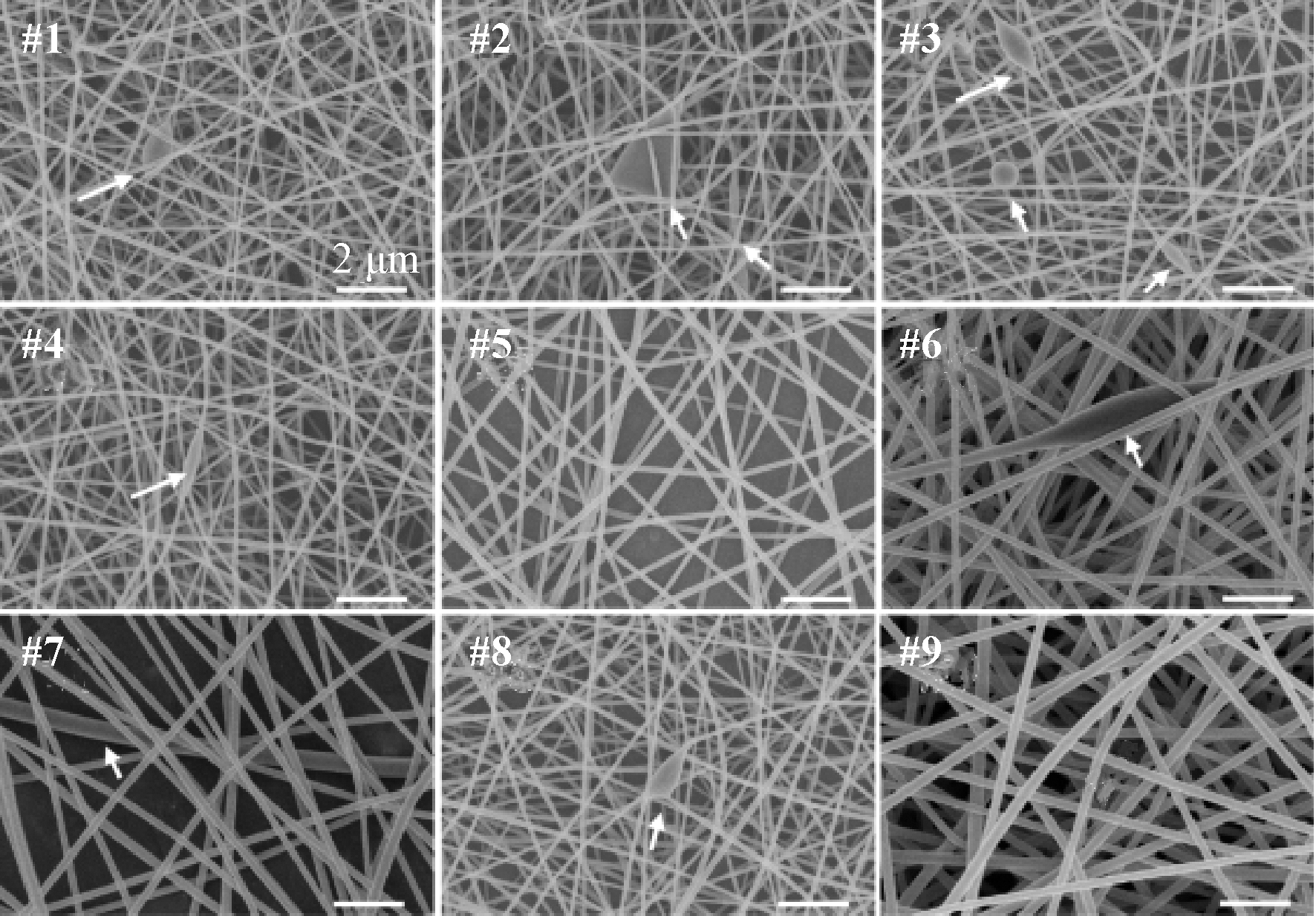
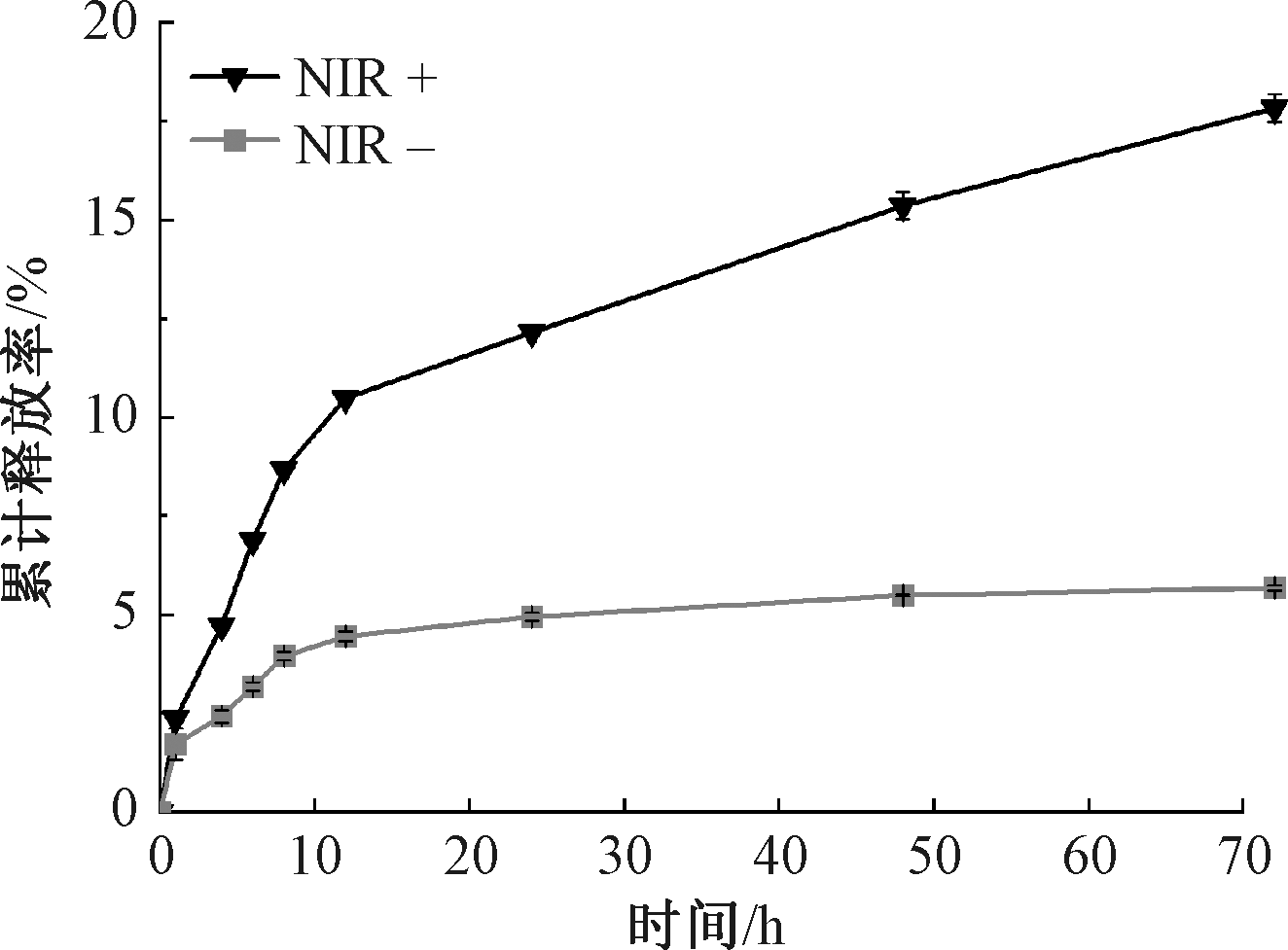
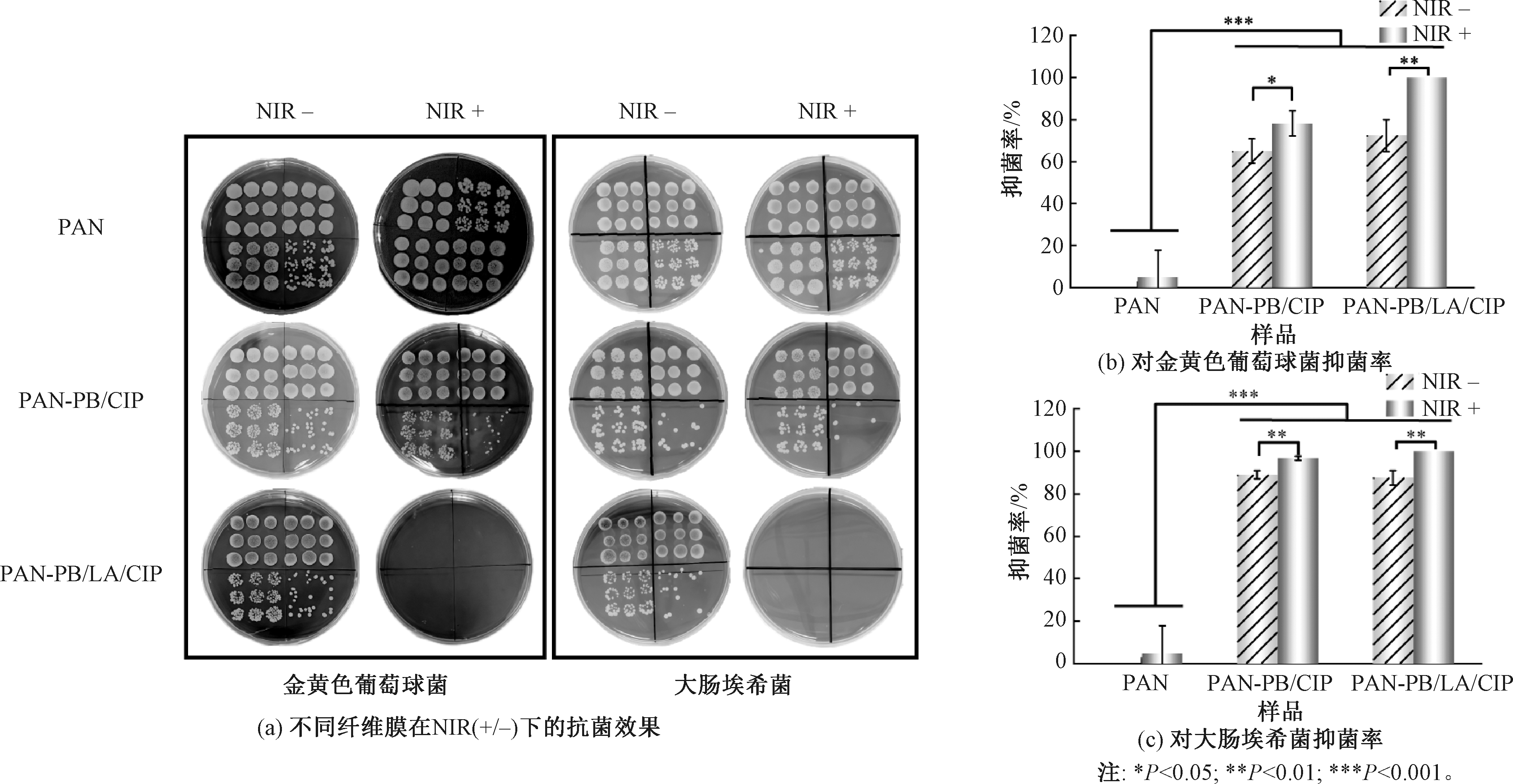
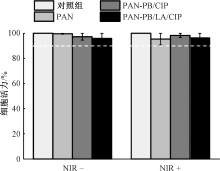
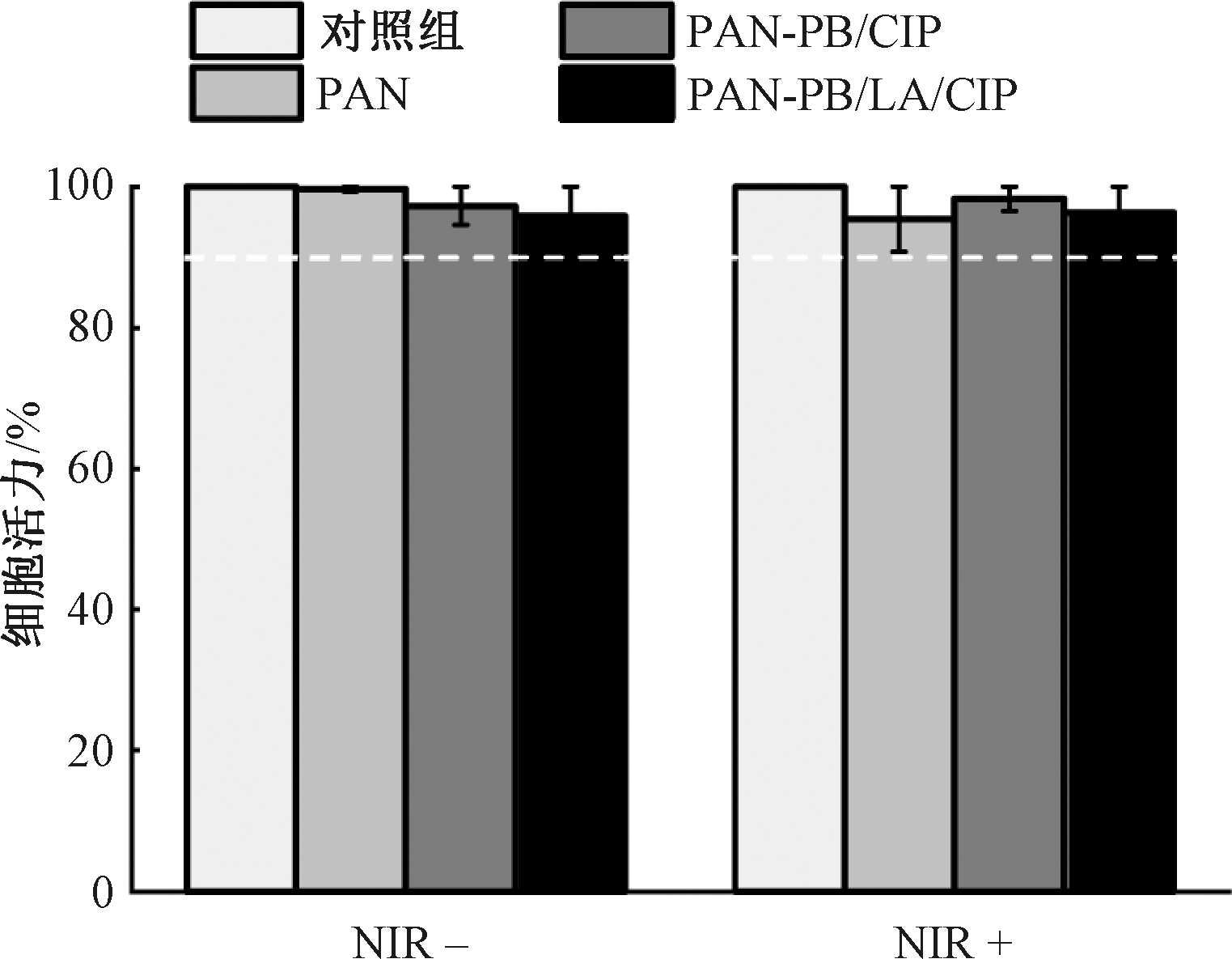
为解决感染性创面治疗中抗生素耐药性加剧与精准抗菌需求提升所带来的临床问题,开发兼具高效抗菌活性与低耐药风险的智能敷料成为组织修复领域的研究热点。基于物理协同抗菌策略,通过静电纺丝技术构建了聚丙烯腈-普鲁士蓝/月桂酸/环丙沙星(PAN-PB/LA/CIP)光热响应性纳米纤维膜,通过正交试验优化工艺参数,并系统评估其形貌特征、光热转换效率、药物控释行为、抗菌性能及生物相容性。结果表明:在纺丝液质量分数14%、接收距离15 cm、电压16 kV的优化组合条件下可制备出结构均匀、性能稳定的纤维膜;近红外光触发下,该敷料可实现光热-药物协同抗菌,释药效率增加且释药率提升3倍以上;近红外光照射下,敷料对金黄色葡萄球菌和大肠埃希菌的清除率达100%,且生物相容性良好。所制备样品能实现高效、安全抗菌并促进伤口愈合,其综合性能满足感染创面修复对抗菌微环境构建的临床需求,为开发新型自适应创面治疗系统提供了实验依据。
中图分类号:
| [1] |
WANG C R, SHIRZAEI SANI E, SHIH C D, et al. Wound management materials and technologies from bench to bedside and beyond[J]. Nature Reviews Materials, 2024, 9(8): 550-566.
doi: 10.1038/s41578-024-00693-y pmid: 40535534 |
| [2] | 胡晨晨, 艾金伟, 李德胜. 慢性创面治疗的研究进展[J]. 数理医药学杂志, 2024, 37(4): 293-302. |
| HU Chenchen, AI Jinwei, LI Desheng. Research progress in the treatment of chronic wounds[J]. Journal of Mathematical Medicine, 2024, 37(4): 293-302. | |
| [3] | 袁香楠, 谭绍洁, 高晶, 等. 靶向光热抗菌纳米材料及其在伤口愈合中的应用研究进展[J]. 生物医学工程学杂志, 2022, 39(1): 207-216. |
|
YUAN Xiangnan, TAN Shaojie, GAO Jing, et al. Research progress about photothermal nanomaterials with targeted antibacterial properties and their applications in wound healing[J]. Journal of Biomedical Engineering, 2022, 39(1): 207-216.
doi: 10.7507/1001-5515.202103022 pmid: 35231983 |
|
| [4] |
YAN S R, XU S, WANG Y, et al. A hydrogel dressing comprised of silk fibroin, Ag nanoparticles, and reduced graphene oxide for NIR photothermal-enhanced antibacterial efficiency and skin regeneration[J]. Advanced Healthcare Materials, 2024, 13(23): 2400884.
doi: 10.1002/adhm.v13.23 |
| [5] |
LIN P R, HE K T, LUO J H, et al. Multifunctional nanofiber system with photothermal-controlled drug delivery and motion monitoring capabilities as intelligent wound dressing[J]. Chemical Engineering Journal, 2025, 503: 158544.
doi: 10.1016/j.cej.2024.158544 |
| [6] | 张晓宇, 韦善文, 方佳炜, 等. 普鲁士蓝纳米粒子抗氧化恢复退变髓核细胞线粒体功能[J]. 中国组织工程研究, 2025, 29(34): 7318-7325. |
| ZHANG Xiaoyu, WEI Shanwen, FANG Jiawei, et al. Prussian blue nanoparticles restore mitochondrial function in nucleus pulposus cells through anti-oxidation[J]. Chinese Journal of Tissue Engineering Research, 2025, 29(34): 7318-7325. | |
| [7] | 梁家玮, 孙婉莹, 罗刘睿麒, 等. 刺激响应型纳米酶及其原位催化增强肿瘤治疗[J]. 广西师范大学学报(自然科学版), 2022, 40(5): 300-306. |
| LIANG Jiawei, SUN Wanying, LUO Liuruiqi, et al. Stimulus-responsive nanozymes and their in situ catalytic enhancement of tumor therapy[J]. Journal of Guangxi Normal University (Natural Science Edition), 2022, 40(5): 300-306. | |
| [8] | 吴洋, 刘方恬, 曹孟杰, 等. 生物质纤维医用敷料研究进展[J]. 纺织学报, 2022, 43(3): 8-16. |
| WU Yang, LIU Fangtian, CAO Mengjie, et al. Progress in biomass fiber medical dressings[J]. Journal of Textile Research, 2022, 43(3): 8-16. | |
| [9] | 王诗雨, 赵玲, 古雅洁, 等. 生物医用伤口敷料的材料及结构设计研究进展[J]. 纺织科学与工程学报, 2025, 42(3): 69-78. |
| WANG Shiyu, ZHAO Ling, GU Yajie, et al. Research progress in materials and structural design of biomedical wound dressing[J]. Journal of Textile Science and Engineering, 2025, 42(3): 69-78. | |
| [10] |
YANG J, YANG F L, XU W H, et al. Composite hydrogel dressing with drug-release capability and enhanced mechanical performance[J]. Biomacromolecules, 2025, 26(9): 5715-5726.
doi: 10.1021/acs.biomac.5c00505 |
| [11] | 徐德军. 基于静电纺丝技术的纳米纤维抗菌伤口敷料的研究[D]. 长春: 吉林大学, 2024:3-10. |
| XU Dejun. Study on antibacterial wound dressing of nanofiber based on electrospinning technology[D]. Changchun: Jilin University, 2024:3-10. | |
| [12] | 张博亚, 李佳慧, 张如全, 等. 静电纺聚丙烯腈/硫酸铜纳米纤维膜的制备及其性能[J]. 纺织学报, 2018, 39(7): 15-20. |
|
ZHANG Boya, LI Jiahui, ZHANG Ruquan, et al. Preparation and properties of electrospun polyacrylonitrile/copper sulfate nanofibrous membrane[J]. Journal of Textile Research, 2018, 39(7): 15-20.
doi: 10.1177/004051756903900103 |
|
| [13] |
张书鹏, 程友星, 任磊, 等. 不同形貌普鲁士蓝纳米粒子的合成及光热性能[J]. 高等学校化学学报, 2018, 39(2): 359-366.
doi: 10.7503/cjcu20170116 |
|
ZHANG Shupeng, CHENG Youxing, REN Lei, et al. Reparation and photothermal properties of Prussian blue nanoparticles with different morphologies†[J]. Chemical Journal of Chinese Universities, 2018, 39(2): 359-366.
doi: 10.7503/cjcu20170116 |
|
| [14] | 徐瑞芳, 谢晓静, 高晶, 等. 敷料用介孔硅基盐酸环丙沙星缓释颗粒的制备及性能[J]. 东华大学学报(自然科学版), 2019, 45(2): 256-262, 269. |
| XU Ruifang, XIE Xiaojing, GAO Jing, et al. Preparation and properties of control-released particles of ciprofloxacin hydrochloride loaded mesoporous silica for wound dressing[J]. Journal of Donghua Univer-sity (Natural Science), 2019, 45(2): 256-262, 269. | |
| [15] | JIA X Q, CAI X J, CHEN Y, et al. Perfluoropentane-encapsulated hollow mesoporous Prussian blue nanocubes for activated ultrasound imaging and photothermal therapy of cancer[J]. ACS Applied Materials & Interfaces, 2015, 7(8): 4579-4588. |
| [16] |
LI D Y, LIU M, LI W Y, et al. Synthesis of Prussian blue nanoparticles and their antibacterial, antiinflammation and antitumor applications[J]. Pharmaceuticals, 2022, 15(7): 769.
doi: 10.3390/ph15070769 |
| [17] |
MING H, TORAD N L K, CHIANG Y D, et al. Size-and shape-controlled synthesis of Prussian Blue nanoparticles by a polyvinylpyrrolidone-assisted crystallization process[J]. CrystEngComm, 2012, 14(10): 3387-3396.
doi: 10.1039/c2ce25040c |
| [18] | 张帅. 高性能聚醚砜超滤膜的制备及其性能研究[D]. 上海: 上海工程技术大学, 2020. |
| ZHANG Shuai. Preparation and properties of high performance polyethersulfone ultrafiltration membrane[D]. Shanghai: Shanghai University of Engineering Science, 2020. | |
| [19] | 段红梅, 汪希铭, 黄子欣, 等. 纤维基介孔SiO2药物载体的构建及其释药性能[J]. 纺织学报, 2020, 41(7): 15-22. |
| DUAN Hongmei, WANG Ximing, HUANG Zixin, et al. Construction and drug release properties of fiber-based mesoporous SiO2 drug carrier[J]. Journal of Textile Research, 2020, 41(7): 15-22. | |
| [20] | 王粉粉, 王芃, 牛洪瑶, 等. 固体NMR研究PAA/PEO共混物中氢键相互作用与结构演化[J]. 物理化学学报, 2020, 36(4): 130-139. |
| WANG Fenfen, WANG Peng, NIU Hongyao, et al. Solid-state NMR studies on hydrogen bonding interactions and structural evolution in PAA/PEO blends[J]. Acta Physico-Chimica Sinica, 2020, 36(4): 130-139. | |
| [21] |
ZHANG J Y, WANG F, SUN Z G, et al. Multidimensional applications of Prussian blue-based nanoparticles in cancer immunotherapy[J]. Journal of Nanobiotechnology, 2025, 23(1): 161.
doi: 10.1186/s12951-025-03236-x pmid: 40033359 |
| [22] |
QIANG L, JIN H S, FENG Y H, et al. Apoptosis-like bacterial death modulated by photoactive hyperthermia nanomaterials and enhanced wound disinfection application[J]. Nanoscale, 2021, 13(35): 14785-14794.
doi: 10.1039/d1nr02881b pmid: 34533172 |
| [23] |
LIU Q Y, SHI S S, LIU S L, et al. Antibacterial activity and mechanism of lauric acid against Staphylococcus aureus and its application in infectious cooked chicken[J]. Foodborne Pathogens and Disease, 2024, 21(12): 766-773.
doi: 10.1089/fpd.2024.0063 |
| [24] |
WANG Y M, YANG P L, WANG Y Y, et al. Thrombin-anchored bacterial cellulose dressing for advanced burn wound care[J]. Advanced Materials, 2025, 37(41): e20338.
doi: 10.1002/adma.v37.41 |
| [25] | 吴先睿, 邱晓慧, 李伟栋, 等. Cu-Fe-Zn合金微丝敷料抗菌性能、生物相容性的实验研究及其对伤口愈合的疗效观察[J]. 中国医师杂志, 2023, 25(7): 1034-1040. |
| WU Xianrui, QIU Xiaohui, LI Weidong, et al. Experimental study on antibacterial properties and biocompatibility of Cu-Fe-Zn alloy microfilament dressings and their therapeutic effects on wound heal-ing[J]. Journal of Chinese Physician, 2023, 25(7): 1034-1040. |
| [1] | 孔艳辉, 张琳萍, 毛志平, 徐红. 甲基丙烯酰化明胶纤维膜的制备及其止血性能[J]. 纺织学报, 2026, 47(1): 1-10. |
| [2] | 王世豪, 徐晓禹, 郑挺, 王金星, 姚德刚, 王俊, 叶翔宇, 田慧, 李婷, 朱斐超. 碳纤维非织造材料的研究应用及展望[J]. 纺织学报, 2026, 47(1): 240-249. |
| [3] | 罗家俊, 何耀权, 赵振鸿, 黎锦稻, 赵景, 黄钢, 王先锋. 苯乙烯-乙烯-丁烯-苯乙烯/氟化聚酰亚胺防水透湿纤维膜的制备及其性能[J]. 纺织学报, 2026, 47(1): 38-45. |
| [4] | 凌磊, 陈凯, 高俊, 武丁胜, 汪邓兵, 张春, 凤权. 聚丙烯腈/共价有机框架复合纳米纤维膜的制备及其对Cr(Ⅵ)的吸附性能[J]. 纺织学报, 2026, 47(1): 54-62. |
| [5] | 刘轲, 王雨曦, 程盼, 朱丽萍, 夏明, 梅涛, 向阳, 周丰, 高飞, 王栋. 多孔磺化氢化苯乙烯-丁二烯嵌段共聚物纤维膜制备及其吸附性能[J]. 纺织学报, 2025, 46(12): 1-10. |
| [6] | 王小虎, 包安娜, 魏静雯, 赵晓曼, 韩潇, 洪剑寒. 基于静电纺丝-静电喷涂协同工艺的跨尺度传感纱一步法制备及其应用[J]. 纺织学报, 2025, 46(12): 101-109. |
| [7] | 厉宗洁, 李腾飞, 鲁一涵, 康卫民. 多功能耦合静电纺多级结构纳米纤维过滤材料研究进展[J]. 纺织学报, 2025, 46(12): 19-28. |
| [8] | 高俊, 凌磊, 陈缘, 武丁胜, 林韩蕾, 李振宇, 凤权. 氨基功能化聚丙烯腈纳米纤维膜的制备及其对Cr(Ⅵ)的吸附性能[J]. 纺织学报, 2025, 46(12): 57-65. |
| [9] | 张慧杰, 李登宇, 周轩, 李秀艳, 汪滨, 徐泉. 磺化聚醚醚酮基铁铬液流电池隔膜的制备及其性能[J]. 纺织学报, 2025, 46(12): 83-91. |
| [10] | 胡新阳, 王宏志. 聚偏氟乙烯-三氟乙烯共聚物摩擦纳米发电织物制备及其输出功率提升[J]. 纺织学报, 2025, 46(12): 92-100. |
| [11] | 舒祖菊, 袁自钰, 周斐, 黄秀文, 王权, 房显龙, 曹美雪. 载姜黄素核壳结构纳米纤维膜的制备及其缓释性能[J]. 纺织学报, 2025, 46(11): 26-33. |
| [12] | 王文淑, 王建刚, 李瀚宇, 王春红, 谭晓璇, 王慧泉. 烷基壳聚糖/聚乙烯醇纳米纤维膜的制备及其止血性能[J]. 纺织学报, 2025, 46(11): 52-60. |
| [13] | 张佃平, 陈琪, 徐登明, 王祚, 王昊. CuO 纳米纤维的制备及其在无酶葡萄糖传感器中的性能[J]. 纺织学报, 2025, 46(11): 61-68. |
| [14] | 郭梦瑶, 吴佳庆, 王迎. 全包覆结构聚氨酯膜条带/棉复合纱制备及其力学性能[J]. 纺织学报, 2025, 46(11): 69-76. |
| [15] | 吴乐然, 吴霓欢, 李林耿, 钟意, 陈鸿鹏, 汤南. 负载厚朴酚的抗菌纳米纤维膜的制备及其性能[J]. 纺织学报, 2025, 46(10): 30-38. |
|
||
 京公网安备11010502044800号