纺织学报 ›› 2026, Vol. 47 ›› Issue (1): 29-37.doi: 10.13475/j.fzxb.20250800501
龚维龙1,2, 阳禹辉1,2( ), 左彪1,2
GONG Weilong1,2, YANG Yuhui1,2(), ZUO Biao1,2
摘要:
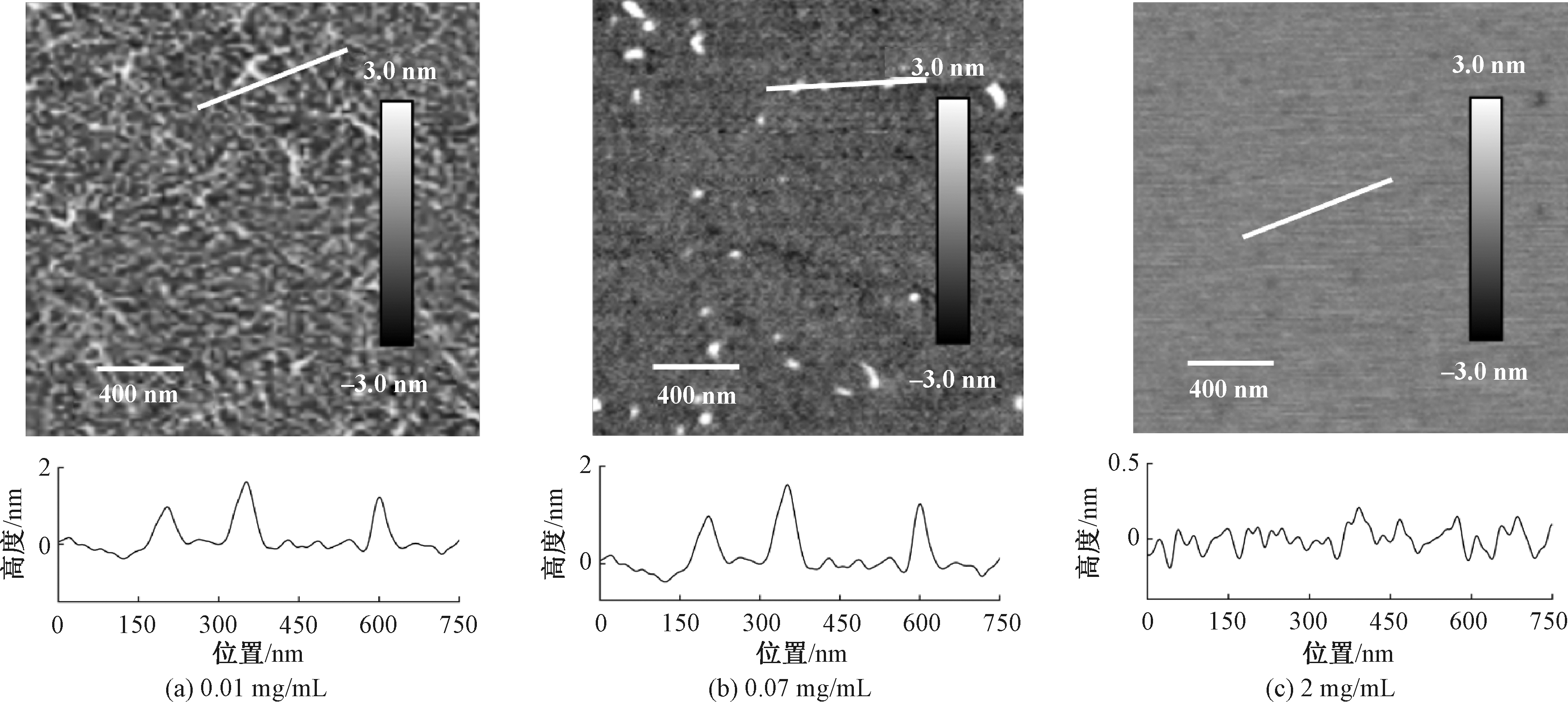
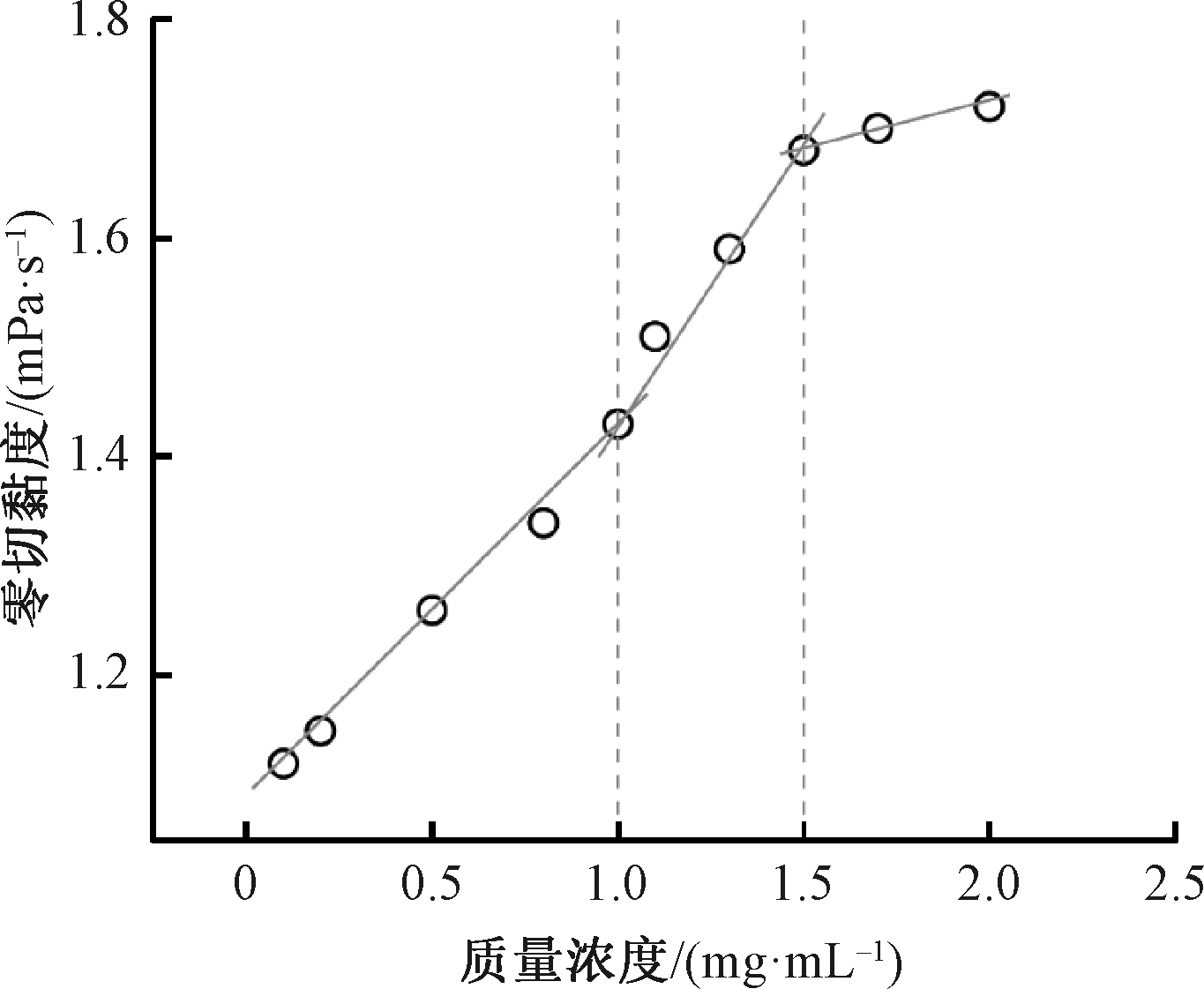
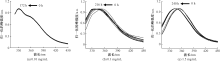
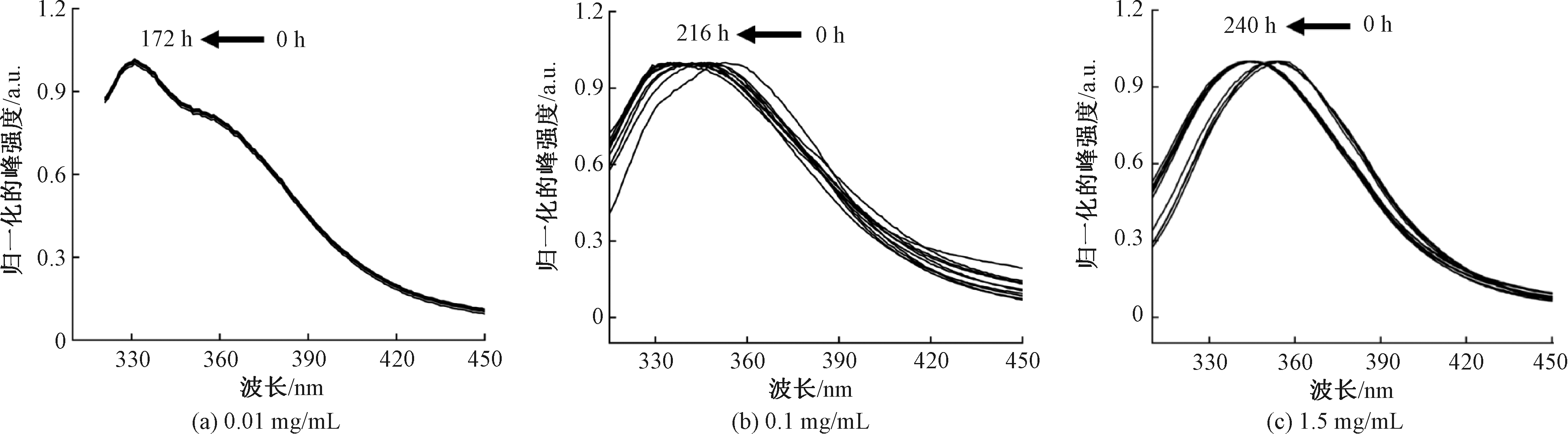
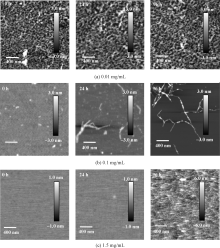
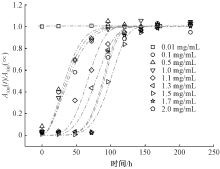
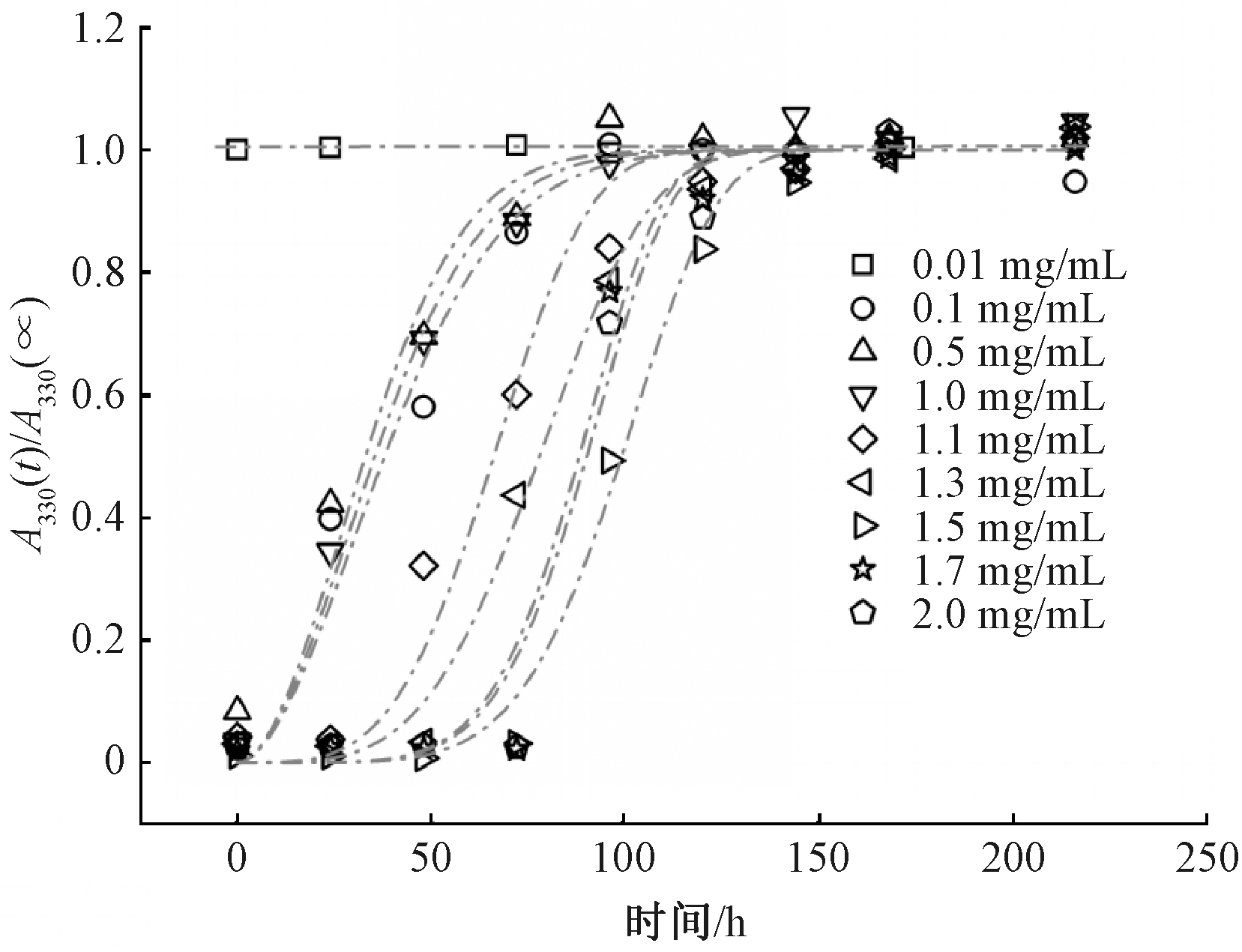
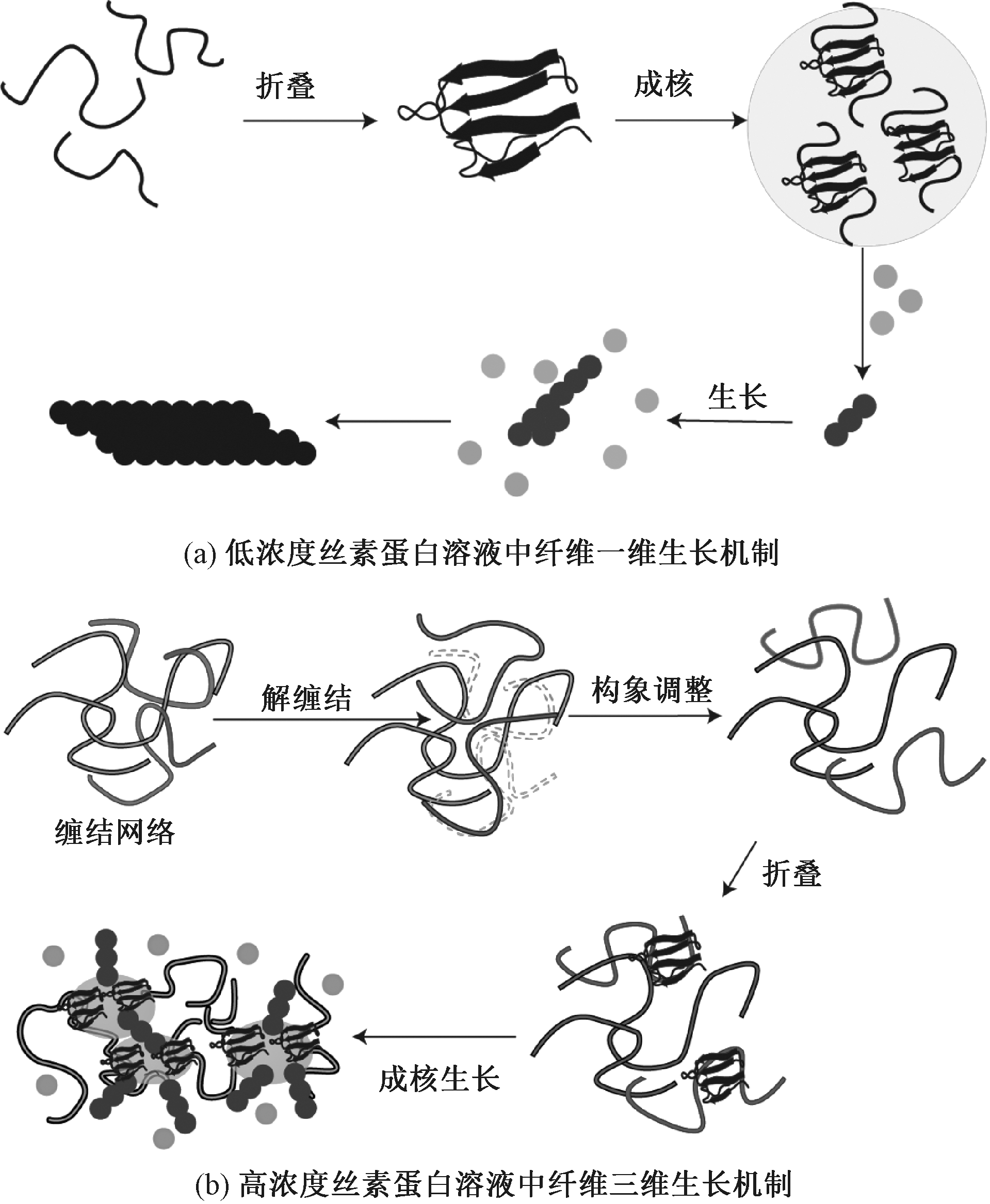
丝素蛋白在溶液中的构象决定其最终产品的性能,因此阐明其在溶液中的构象以及转变动力学的影响机制至关重要。将丝素蛋白冻干粉末溶解于去离子水中,制备了不同质量浓度的水溶液。通过荧光光谱监测丝素蛋白的构象转变,利用原子力显微镜表征构象转变过程中聚集体的形态变化,并利用流变仪测量不同质量浓度下的溶液黏度,揭示了溶液浓度对丝素蛋白的构象及其转变动力学的影响机制。结果表明:溶液质量浓度对调控丝素蛋白的构象及其转变动力学至关重要;高浓度条件下丝素蛋白初始构象以无规卷曲为主,转变为β-折叠构象过程出现明显“滞后期”,由β-折叠结构聚集形成的纤维呈现三维网状生长特征;低浓度条件下丝素蛋白溶液初始状态存在较多的β-折叠构象并随时间延长继续增多,进一步聚集形成纤维,表现为均相成核和一维生长的特点。
中图分类号:
| [1] | WATT J C, WARDWELL A E. When silk was gold: central asian and Chinese textiles[M]. New York: Metropolitan Museum of Art, 1997: 128-142. |
| [2] |
张子凡, 李鹏飞, 王建南, 等. 丝素蛋白载药纳米粒的研究进展[J]. 纺织学报, 2023, 44(10): 205-213.
doi: 10.13475/j.fzxb.20220607102 |
|
ZHANG Zifan, LI Pengfei, WANG Jiannan, et al. Research progress in silk fibroin drug-loaded nanoparticles[J]. Journal of Textile Research, 2023, 44(10): 205-213.
doi: 10.13475/j.fzxb.20220607102 |
|
| [3] | 高欣, 张海萍, 陈宇, 等. 丝素蛋白多孔材料及其在组织工程领域的应用[J]. 纺织学报, 2008, 29(10): 132-136. |
| GAO Xin, ZHANG Haiping, CHEN Yu, et al. Application of silk fibroin porous material in tissue engineering[J]. Journal of Textile Research, 2008, 29(10): 132-136. | |
| [4] |
ZHU B W, WANG H, LEOW W R, et al. Silk fibroin for flexible electronic devices[J]. Advanced Materials, 2016, 28(22): 4250-4265.
doi: 10.1002/adma.v28.22 |
| [5] | 闻荻江, 王辉, 朱新生, 等. 丝素蛋白的构象与结晶性[J]. 纺织学报, 2005, 26(1): 110-112. |
| WEN Dijiang, WANG Hui, ZHU Xinsheng, et al. Conformation and crystallinity of silk fibroin[J]. Journal of Textile Research, 2005, 26(1): 110-112. | |
| [6] | 林永佳, 杨董超, 张佩华, 等. 再生丝素蛋白/脱细胞真皮基质共混纳米纤维膜的制备及其性能[J]. 纺织学报, 2019, 40(7): 13-18. |
| LIN Yongjia, YANG Dongchao, ZHANG Peihua, et al. Preparation and properties of regenerated silk fibroin/acellular dermal matrix blended nanofiber membrane[J]. Journal of Textile Research, 2019, 40(7): 13-18. | |
| [7] | 姚理荣, 林红, 陈宇岳, 等. 丝素蛋白氧化棉纤维的共价结构分析[J]. 纺织学报, 2008, 29(2): 11-14. |
| YAO Lirong, LIN Hong, CHEN Yuyue, et al. Covalence structure of oxidized cotton fiber treated by fibroin solution[J]. Journal of Textile Research, 2008, 29(2): 11-14. | |
| [8] |
INDRAKUMAR S, JOSHI A, DASH T K, et al. Photopolymerized silk fibroin gel for advanced burn wound care[J]. International Journal of Biological Macromolecules, 2023, 233: 123569.
doi: 10.1016/j.ijbiomac.2023.123569 |
| [9] |
MATHUR A B, GUPTA V. Silk fibroin-derived nanoparticles for biomedical applications[J]. Nanomedicine, 2010, 5(5): 807-820.
doi: 10.2217/nnm.10.51 |
| [10] |
LI X B, WANG L X, XIAO G, et al. Adhesive tape-assisted etching of silk fibroin film with LiBr aqueous solution for microfluidic devices[J]. Materials Science and Engineering: C, 2021, 118: 111543.
doi: 10.1016/j.msec.2020.111543 |
| [11] | 李玲玲, 周伟, 代方银, 等. 不同钙-醇溶解体系丝素蛋白的制备及表征研究[J]. 中国生物工程杂志, 2012, 32(4): 28-32. |
| LI Lingling, ZHOU Wei, DAI Fangyin, et al. Preparation and characterization of silk fibroin treated with different calcium-alcohol solution[J]. China Biotechnology, 2012, 32(4): 28-32. | |
| [12] |
LI M Z, WU Z Y, ZHANG C S, et al. Study on porous silk fibroin materials: II. preparation and characteristics of spongy porous silk fibroin materials[J]. Journal of Applied Polymer Science, 2001, 79(12): 2192-2199.
doi: 10.1002/(ISSN)1097-4628 |
| [13] |
QIAO X Y, MILLER R, SCHNECK E, et al. Influence of pH on the surface and foaming properties of aqueous silk fibroin solutions[J]. Soft Matter, 2020, 16(15): 3695-3704.
doi: 10.1039/c9sm02372k pmid: 32227052 |
| [14] |
HU X, KAPLAN D, CEBE P. Effect of water on the thermal properties of silk fibroin[J]. Thermochimica Acta, 2007, 461(1/2): 137-144.
doi: 10.1016/j.tca.2006.12.011 |
| [15] |
TANG X X, QIAO X Y, MILLER R, et al. Effect of ionic strength on the interfacial viscoelasticity and stability of silk fibroin at the oil/water interface[J]. Journal of the Science of Food and Agriculture, 2016, 96(15): 4918-4928.
doi: 10.1002/jsfa.7829 pmid: 27256721 |
| [16] |
PARK J H, KIM M H, JEONG L, et al. Effect of surfactants on sol-gel transition of silk fibroin[J]. Journal of Sol-Gel Science and Technology, 2014, 71(2): 364-371.
doi: 10.1007/s10971-014-3379-4 |
| [17] |
YANG Y H, SHAO Z Z, CHEN X, et al. Optical spectroscopy to investigate the structure of regenerated Bombyx Mori silk fibroin in solution[J]. Biomacromolecules, 2004, 5(3): 773-779.
doi: 10.1021/bm0343848 |
| [18] |
TOPRAKCIOGLU Z, CHALLA P, XU C, et al. Label-free analysis of protein aggregation and phase behavior[J]. ACS Nano, 2019, 13(12): 13940-13948.
doi: 10.1021/acsnano.9b05552 pmid: 31738513 |
| [19] |
KAMADA A, TOPRAKCIOGLU Z, KNOWLES T P J. Kinetic analysis reveals the role of secondary nucleation in regenerated silk fibroin self-assembly[J]. Biomacromolecules, 2023, 24(4): 1709-1716.
doi: 10.1021/acs.biomac.2c01479 |
| [20] |
JIN H J, PARK J, KARAGEORGIOU V, et al. Water-stable silk films with reduced β-sheet content[J]. Advanced Functional Materials, 2005, 15(8): 1241-1247.
doi: 10.1002/adfm.v15:8 |
| [21] |
ZHANG F, LU Q, MING J F, et al. Silk dissolution and regeneration at the nanofibril scale[J]. Journal of Materials Chemistry B, 2014, 2(24): 3879-3885.
doi: 10.1039/c3tb21582b pmid: 32261734 |
| [22] |
LI G Y, ZHOU P, SHAO Z Z, et al. The natural silk spinning process[J]. European Journal of Biochemistry, 2001, 268(24): 6600-6606.
doi: 10.1046/j.0014-2956.2001.02614.x |
| [23] |
CHEN X, SHAO Z Z, KNIGHT D P, et al. Conformation transition kinetics of Bombyx Mori silk protein[J]. Proteins: Structure, Function, and Bioinformatics, 2007, 68(1): 223-231.
doi: 10.1002/prot.v68:1 |
| [24] |
ASAKURA T, SUZUKI H, WATANABE Y. Conformational characterization of silk fibroin in intact Bombyx Mori and Pilosamia Cynthia ricini silkworms by carbon-13 NMR spectroscopy[J]. Macromolecules, 1983, 16(6): 1024-1026.
doi: 10.1021/ma00240a043 |
| [25] |
VLADISLAV VICTOROVICH K, TATYANA ALEKSANDROVNA K, VICTOR VITOLDOVICH P, et al. Spectra of tryptophan fluorescence are the result of co-existence of certain most abundant stabilized excited state and certain most abundant destabilized excited state[J]. Spectrochimica Acta Part A: Molecular and Biomolecular Spectroscopy, 2021, 257: 119784.
doi: 10.1016/j.saa.2021.119784 |
| [26] |
HU X, KAPLAN D, CEBE P. Determining beta-sheet crystallinity in fibrous proteins by thermal analysis and infrared spectroscopy[J]. Macromolecules, 2006, 39(18): 6161-6170.
doi: 10.1021/ma0610109 |
| [27] | KLUGE J A, KAHN B T, BROWN J E, et al. Optimizing molecular weight of lyophilized silk as a shelf-stable source material[J]. ACS Biomaterials Science & Engineering, 2016, 2(4): 595-605. |
| [28] |
GHISAIDOOBE A B T, CHUNG S J. Intrinsic tryptophan fluorescence in the detection and analysis of proteins: a focus on Förster resonance energy transfer techniques[J]. International Journal of Molecular Sciences, 2014, 15(12): 22518-22538.
doi: 10.3390/ijms151222518 pmid: 25490136 |
| [29] |
BOTEVA R, ZLATEVA T, DOROVSKA-TARAN V, et al. Dissociation equilibrium of human recombinant interferon γ[J]. Biochemistry, 1996, 35(47): 14825-14830.
doi: 10.1021/bi9527597 |
| [30] |
LAKOWICZ J R, MALIWAL B P, CHEREK H, et al. Rotational freedom of tryptophan residues in proteins and peptides[J]. Biochemistry, 1983, 22(8): 1741-1752.
doi: 10.1021/bi00277a001 pmid: 6849881 |
| [31] | PERMYAKOV E A. Luminescent spectroscopy of proteins[M]. Boca Raton: CRC Press, 1993:1-40. |
| [32] |
EFTINK M R. Fluorescence techniques for studying protein structure[J]. Methods of Biochemical Analysis, 1991, 35: 127-205.
pmid: 2002770 |
| [33] |
TRETINNIKOV O N, OHTA K. Conformation-sensitive infrared bands and conformational characteristics of stereoregular poly(methyl methacrylate)s by variable-temperature FTIR spectroscopy[J]. Macromolecules, 2002, 35(19): 7343-7353.
doi: 10.1021/ma020411v |
| [34] |
XU G Q, GONG L, YANG Z, et al. What makes spider silk fibers so strong? from molecular-crystallite network to hierarchical network structures[J]. Soft Matter, 2014, 10(13): 2116-2123.
doi: 10.1039/c3sm52845f pmid: 24652059 |
| [35] | RUBINSTEIN M, COLBY R H. Polymer physics[M]. New York: Oxford University Press, 2003: 199-252. |
| [36] | DOI M, EDWARDS S F. Dynamics of concentrated polymer systems: part 3. the constitutive equation[J]. J Chem Soc, Faraday Trans 2, 1978, 74: 1818-1832. |
| [37] |
COLBY R H. Structure and linear viscoelasticity of flexible polymer solutions: comparison of polyelectrolyte and neutral polymer solutions[J]. Rheologica Acta, 2010, 49(5): 425-442.
doi: 10.1007/s00397-009-0413-5 |
| [38] |
ROYER C A. Probing protein folding and conformational transitions with fluorescence[J]. Chemical Reviews, 2006, 106(5): 1769-1784.
pmid: 16683754 |
| [39] |
HU X, LU Q, KAPLAN D L, et al. Microphase separation controlled β-sheet crystallization kinetics in fibrous proteins[J]. Macromolecules, 2009, 42(6): 2079-2087.
doi: 10.1021/ma802481p |
| [40] |
AVRAMI M. Kinetics of phase change: I general theory[J]. The Journal of Chemical Physics, 1939, 7: 1103.
doi: 10.1063/1.1750380 |
| [41] |
AVRAMI M. Kinetics of phase change. II transformation-time relations for random distribution of nuclei[J]. The Journal of Chemical Physics, 1940, 8(2): 212-224.
doi: 10.1063/1.1750631 |
| [42] |
AVRAMI M. Granulation, phase change, and microstructure kinetics of phase change: III[J]. The Journal of Chemical Physics, 1941, 9(2): 177-184.
doi: 10.1063/1.1750872 |
| [1] | 顾家玉, 张炜栋, 董永春, 孙璇, 徐良军. 银杏叶黄酮对羊毛和蚕丝织物的抗菌整理[J]. 纺织学报, 2026, 47(1): 142-150. |
| [2] | 陈铭, 张豪, 张子缘, 杨清标, 高吉, 范存伟, 孙戒. 含生物基组分的酸性染料的合成及其染色性能[J]. 纺织学报, 2025, 46(12): 142-151. |
| [3] | 杨孟晓, 邱小雪, 吴芳, 刘琳, 姚菊明. 蚕丝基导电凝胶纤维的制备及其应变传感性能[J]. 纺织学报, 2025, 46(12): 49-56. |
| [4] | 龙红霞, 吴伟, 刘娅岚, 徐红, 毛志平. 纤维素纤维孔道吸湿溶胀行为的分子动力学模拟[J]. 纺织学报, 2025, 46(11): 155-163. |
| [5] | 马颖媛, 李建芳, 胡毅. 活性红195在异构烷烃体系中对蚕丝织物的少水染色性能[J]. 纺织学报, 2025, 46(11): 178-187. |
| [6] | 曾一洪, 付开秀, 王彦, 罗健, 陈国宝. 不同动物来源脱细胞骨骼肌基质-丝素蛋白复合支架理化性质比较[J]. 纺织学报, 2025, 46(11): 43-51. |
| [7] | 李健阁, 吴伟, 韩伟鹏, 纪柏林, 徐红, 毛志平. 乙烯砜醋酸酯活性分散染料的合成及其对锦纶66的染色应用[J]. 纺织学报, 2025, 46(10): 143-151. |
| [8] | 曾姚, 吕金凤, 王介平, 刘荣鹏, 周婵. 三维蚕丝蛋白支架的应用研究进展[J]. 纺织学报, 2025, 46(09): 258-267. |
| [9] | 高闻语, 陈诚, 奚晓玮, 邓林红, 刘杨. 改性丝素蛋白纤维增强胶原基角膜修复材料的制备及其性能[J]. 纺织学报, 2025, 46(08): 1-9. |
| [10] | 张新宇, 金小培, 朱金唐, 崔华帅, 吴鹏飞, 崔宁, 史贤宁. 聚乳酸熔喷非织造布热尺寸稳定性提升方法[J]. 纺织学报, 2025, 46(08): 127-135. |
| [11] | 姜庭国, 况军, 司虎, 张玉梅, 陈烨, 王华平. 工业丝用钛系聚酯的结晶动力学研究[J]. 纺织学报, 2025, 46(08): 53-61. |
| [12] | 江淑宁, 杨海伟, 李长龙, 郑天亮, 王宗乾. 低共熔溶剂剥离法制备丝素蛋白纳米原纤及其成膜性能[J]. 纺织学报, 2025, 46(07): 1-9. |
| [13] | 于晓坤, 易萍, 谢冠婧, 蔡凌霄. 基于人体动力学的服装衣袖运动舒适性探究[J]. 纺织学报, 2025, 46(06): 196-202. |
| [14] | 于梦菲, 高文丽, 任婧, 曹雷涛, 彭若铉, 凌盛杰. 摩擦纳米发电机用皮芯结构纤维的制备及其性能[J]. 纺织学报, 2025, 46(05): 1-9. |
| [15] | 殷连博, 李家炜, 段慧敏, 宋理想, 陈玉霜, 厉巽巽, 戚栋明. 液体分散染料染色废水的循环染色[J]. 纺织学报, 2025, 46(03): 131-140. |
|
||
 京公网安备11010502044800号